Showing posts with label Biblical Counseling. Show all posts

Saturday, June 04, 2011

“These Are Your Grandbabies!”


“These Are Your Grandbabies!”


Enjoy the last three paragraphs in the Introduction to my upcoming book (September 2001) Equipping Counselors for Your Church: The 4E Ministry Training Strategy.

Sister Ellen Barney is the First Lady (Sr. Pastor’s wife) of a large, predominantly African American church near Baltimore, Maryland. She has implemented the 4E Ministry Training Strategy for over a decade to equip over 1,000 women in her LEAD (Life Encouragers And Disciplers) Ministry.

They do it up big! Their graduation ceremonies are better than many colleges. I remember the first time Sister Ellen invited me to be their commencement speaker. As she introduced me, she looked over the crowd of over 50 graduates, and said, “These are your grandbabies Dr. Kellemen! You trained me and I trained them!” Now, years later, as Sister Ellen has trained trainers who train others, she tells me, “Dr. Kellemen, these are your great-great-grandbabies!”

Do you want to be a spiritual grandparent—discipling disciple-makers? Do you want to pass the baton of ministry? Do you want to change lives? Then equip God’s people to change lives with Christ’s changeless truth.

Join the Conversation

Who are your spiritual grandbabies? Do you know who your spiritual grandparent is?

Friday, March 25, 2011

Enjoy Five Book Trailer Videos


Enjoy Five Book Trailer Videos

Enjoy Equipping Counselors for Your Church: Watch the book trailer video sharing how to equip others to speak the truth in love.

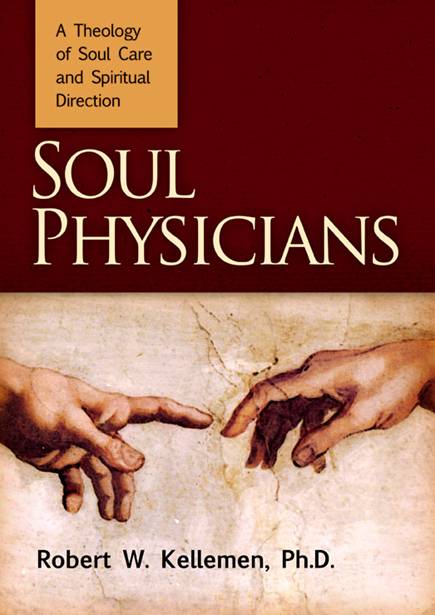
Enjoy Soul Physicians: Watch the book trailer video sharing how to change lives with Christ's changeless truth.

Enjoy Spiritual Friends: Watch the book trailer video sharing how to care like Christ.

Enjoy Beyond the Suffering: Watch the book trailer video sharing how we can learn from the heroes of the Black Church.

Enjoy What About Bob?: No, not the movie by the same name. Watch a video that finally answers the question, "What does 'RPM' mean?"

Enjoy Our New RPM Ministries YouTube Channel: We've posted over a dozen videos on Christian living and biblical counseling.

Tuesday, January 18, 2011

The Top Ten Trends in Biblical Counseling

Remember to visit our new site with daily blog updates at RPM Ministries.


The Top Ten Trends in Biblical Counseling

Note: The Gospel Coalition originally posted the following article I wrote on The Top Ten Trends in Biblical Counseling.

As I speak around the country on biblical counseling, I typically hear two very different responses. Sometimes I’m asked, “When you say ‘biblical counseling,’ you don’t mean ___________ do you?” Various people fill in that blank with different labels—negative to them. What a shame that placing the word “biblical” in front of “counseling” causes some in the church to recoil in fear.

But there’s good news—the tide is turning. I consistently hear comments like, “God has used biblical counseling to change my life.” And, “Our church’s biblical counseling ministry is impacting our entire congregation and our community for God’s glory.”

It’s exciting to reflect on what God is doing as He empowers leaders to equip His people to speak the truth in love (Ephesians 4:11-16). With that reality as the backdrop, here are the top ten positive trends that I see in biblical counseling today—shared in reverse order, of course, to heighten the anticipation.

10. A Collegial Spirit

Increasingly, members of biblical counseling organizations are choosing to work together and to learn from each other. The 2010 launch of the Biblical Counseling Coalition (BCC) is just one example. The vision of Pastor James MacDonald and Pastor Steve Viars, the BCC exists to strengthen churches, para-church organizations, and educational institutions by promoting excellence and unity in biblical counseling as a means to accomplish compassionate outreach and effective discipleship. BCC President Steve Viars, explains this collegial vision:

“The BCC is about relationships and resources. Relationships because we believe that together we can accomplish more. Resources because we want to help everyone interested in practicing biblical counseling in their churches to have the best tools and training possible.”

To read the rest of the post, visit The Gospel Coalition site for The Top Ten Trends in Biblical Counseling.

To read the entire post in a PDF format, visit the RPM Ministries site at The Top Ten Trends in Biblical Counseling.

Wednesday, April 14, 2010

The Remedy for Secular Psychology


Remember to visit and bookmark my fresh new site: http://www.rpmministries.org/

I’ve added scores of new free resources, book reviews, videos, and more—all because I know you want to change lives.


The Remedy for Secular Psychology

A friend shares with you a set of emotional symptoms that leave the two of you stumped. Where do you turn for answers that make a real difference?

A parishioner tells you about a decade-old “besetting sin” that they just can’t find victory over. Where do you turn to discern root causes and robust cures?

Real Answers for Real People with Real Problems

Whether you’re a lay person or a pastor, where do you turn for real answers?

Unfortunately, too often, in our sincere desire to help our hurting friends, we race to the latest trends. We turn to secular psychology and find human-shaped answers for God-shaped problems. We discover human-sized solutions when what we really need are God-sized SOUL-u-tions.

There has to be a better way.

There is. It’s God’s way. It’s learning to be a soul physician from the ultimate Soul Physician—Christ. It’s Christ-centered, comprehensive, compassionate, and culturally-informed biblical counseling and spiritual formation.

It’s the way the Apostle Paul spoke about and prayed about in Philippians. “And this is my prayer: that your love may abound more and more in knowledge and depth of insight” (Philippians 1:9).

Soul Physicians: The Remedy for Secular Psychology

It was in my first pastoral ministry that I began equipping lay people and pastors to become soul physicians. I longed for them to understand people, diagnose problems, and prescribe solutions—biblically. I long for you to do the same.

Twenty-five years later, I authored Soul Physicians: A Theology of Soul Care and Spiritual Direction. It’s the remedy for secular psychology.

It’s also the remedy for “take two verses and call me in the morning.” It remedies “secular help” and “shallow help.”

Soul Physicians helps you to help your friends. It empowers you to change lives with Christ’s changeless truth.

Unique Focus: Life’s Seven Ultimate Questions

Soul Physicians explores from the Scriptures seven truths that shape the way we see life and ministry. These truths about life’s seven ultimate questions teach us what makes biblical counseling truly biblical.

• Question 1: “What is truth? Where do I find answers?” Answer 1—The Word: “God’s Word is sufficient, authoritative, profound, and relevant.”

• Question 2: “Who is God?” Answer 2—Community/The Creator: “God is Trinitarian.”

• Question 3: “Who am I”? Answer 3—Creation: “We are created with dignity by God in the image of Christ.”

• Question 4: “What went wrong?” Answer 4—Fall: “We sinfully and foolishly choose god-substitutes over God.”

• Question 5: “Can we change? How do people change?” Answer 5—Redemption: “We must apply our complete salvation to our daily sanctification.”

• Question 6—“Where am I headed? What is my destiny?” Answer 6—Consummation/Glorification: “Heaven is my final home.”

• Question 7—“Can I help? How can I help?” Answer 7—Sanctification/Ministry: “We dispense God’s cure for the soul—grace.”

Unique Features

Soul Physicians includes a built-in personal application discussion guide to help develop the Christlike character of the biblical counselor.

Soul Physicians includes a built-in ministry implication discussion guide to help develop the relational competence of the biblical counselor.

Soul Physicians is written in the language of “theo-drama”—relating theology practically and powerfully to our calling to love God and to love one another.

Soul Physicians is comprehensive and compassionate—blending robust biblical truth with caring one another application.

Soul Physicians is perfect for individual and group work. Join the growing number of lay people, pastors, professional Christian counselors, and students who are using Soul Physicians as their twenty-first century manual for understanding people and ministering to them God’s way.

Learn More

To read what others are saying, to download a free sample chapter, and to order Soul Physicians at 40% off, visit my
RPM Ministries (http://www.rpmministries.org/) Soul Physicians page: http://www.rpmministries.org/writing/soul-physicians/

Join the Conversation

Where are you turning to be equipped for one another ministry in the local church that trains you to understand people, diagnose problems, and prescribe solutions—biblically?

Wednesday, April 07, 2010

The Remedy for “Take Two Verses and Call Me in the Morning”


Remember to visit and bookmark my fresh new site: www.rpmministries.org

I've added scores of new free resources, book reviews, videos, and more--all because I know you want to change lives.

The Remedy for “Take Two Verses and Call Me in the Morning”

Your friend tells you, “My spouse just left me.” What do you say? How do you help?

A parishioner shares, “Pastor, I can’t deal with my bitterness and anger.” How do you respond?

What Do I Do After the Hug?

Whether you’re a lay person or a pastor, what do you do after the hug? How are you being trained for biblical one another ministry in the local church? Unfortunately, even the Christian world seems to recommend two extremes.

Extreme # 1: Secular Help.—“The World’s Way”

Someone comes to us with a life struggle, and in our panic we race to the self-help shelf at the local bookstore. Or we type the topic in an Amazon.com search and we find a boatload of the world’s answers.

There has to be a better way.

Extreme # 2: Shallow Help—“Take Two Verses and Call Me in the Morning”

Or, in our attempts to be biblical, we become shallow. We quote a verse and rub it on like a band-aid. We wave a passage of Scripture like a magic wand.

There has to be a better way.

How to Care Like Christ: Helping You to Help Your Friend

Of course there’s a better way. It’s caring like Christ. It’s speaking and living the truth in love. It’s Christ-centered, comprehensive, compassionate, and culturally-informed biblical counseling and spiritual formation.

It’s caring like the Apostle Paul who said, “We loved you so much that we gave you not only the Scriptures, but our own souls, because you were dear to us’ (1 Thessalonians 2:8).

Spiritual Friends: The Remedy for “Take Two Verses and Call Me in the Morning”

It was in my first pastoral ministry that I began equipping lay people and pastors in spiritual friendship. I longed for them to combine truth and love, Scripture and soul, so they could help others with suffering and sin. I long for you to do the same.

Twenty-five years later, I authored Spiritual Friends: A Methodology of Soul Care and Spiritual Direction. It’s the remedy for “take two verses and call me in the morning.” It’s the remedy to shallow help and to secular help.

Spiritual Friends helps you to help your friends. It equips you to change lives with Christ’s changeless truth.

Unique Focus

Spiritual Friends trains you, step-by-step, in a relational model for dealing with suffering and with sin.
Spiritual Friends equips you to develop five “GRACE” biblical counseling skills to offer sustaining help for suffering. “It’s Normal to Hurt.”
Spiritual Friends equips you to develop five “RESTS” biblical counseling skills to offer healing hope for suffering. “It’s Possible to Hope”
Spiritual Friends equips you to develop six “PEACEE” biblical counseling skills to offer reconciling care-fronting for sin and growth in grace. “It’s Horrible to Sin, but Wonderful to Be Forgiven.”
Spiritual Friends equips you to develop six “FAITHH” biblical counseling skills to offer guiding wisdom for sin and growth in grace. “It’s Supernatural to Mature.”

Unique Features

Spiritual Friends includes a built-in application guide to help you to grow in Christ-like character.
Spiritual Friends is a biblically-relevant training manual with thousands of sample “spiritual conversations” that model how to speak the truth in love.
Spiritual Friends is a relational practical workbook with hundreds of skill-building exercises to train you in the art of spiritual friendship/biblical counseling.
• With scores of role-plays, vignettes, life applications, and ministry implications—Spiritual Friends is perfect for individual and group work. A growing number of church small groups, church lay counseling training ministries, pastors, professional Christian counselors, and students are using Spiritual Friends as their twenty-first century manual for people helping.

Learn More

To read what others are saying, to download a free sample chapter, and to order Spiritual Friends at 40% off, please visit my RPM Ministries (http://www.rpmministries.org/) Spiritual Friends page (http://www.rpmministries.org/writing/spiritual-friends/).

Join the Conversation

How are you being equipped for biblical one another ministry in the local church?

Saturday, March 27, 2010

A Conversation about Brian McLaren’s A New Kind of Christianity

Remember to bookmark and visit my fresh new site at http://www.rpmministries.org/

I've posted twice as many free resources, daily blogs, book reviews, videos, and more, all because I know You Want to Change Lives!

A Conversation about Brian McLaren’s A New Kind of Christianity

Final Recap: Links to Responses to A New Kind of Christianity


Welcome: I’ve finished blogging my way through a series of responses to Brian McLaren’s book A New Kind of Christianity. My focus has been on pastoral theology or practical theology response. As a pastor, counselor, and professor who equips the church for biblical counseling and spiritual formation, I was asking: “What difference does our response to each question make for how we care like Christ (biblical counseling) and for how we live like Christ (spiritual formation)?”

Final Recap: Word Document Format

I’ve created an edited version of my entire blog series in a Word Document format. It’s free, so I’ve posted it along with my other Free Resources (http://www.rpmministries.org/free-resources/). You can enjoy over 100 free resources for your life and ministry at RPM Ministries (http://www.rpmministries.org/).

Feel free to download and to share my final recap in Word Document format: A Conversation about Brian McLaren’s A New Kind of Christianity (http://bit.ly/b9FjP2).

Final Recap: Blog Format

If you’ve benefitted from this blog series, and if you think others would benefit also, please feel free to reference this series, link to it on your site, or post it on your site.

Here are all the links in my blog series on A New Kind of Christianity.

• Post # 1: Brian McLaren, I Accept Your Invitation http://bit.ly/a8D42I

• Post # 2: A Biblical Counseling Response to Brian McLaren http://bit.ly/dmXIll

• Post # 3: Responding to Brian McLaren’s Q # 1: The Narrative Question http://bit.ly/d6XPTO

• Post # 4: Responding to Brian McLaren’s Q # 2: The Authority Question—The Bible http://bit.ly/ctNf2I

• Post # 5: Responding to Brian McLaren’s Q # 3: The God Question http://bit.ly/aUXFKr

• Post # 6: Responding to Brian McLaren’s Q # 4: The Jesus Question http://bit.ly/a3JRHi

• Post # 7: Responding to Brian McLaren’s Q # 5: The Gospel Question http://bit.ly/bOBn6e

• Post # 8: Responding to Brian McLaren’s Q # 6: The Church Question http://bit.ly/cviqsN

• Post # 9: Responding to Brian McLaren’s Q # 7: The Sex Question http://bit.ly/cs7BpU

• Post # 10: Responding to Brian McLaren’s Q # 8: The Future Question http://bit.ly/bGM6pL

• Post # 11: Responding to Brian McLaren’s Q # 9: The Pluralism Question http://bit.ly/bSuinZ

• Post # 12: Responding to Brian McLaren’s Q # 10: The What Now Question http://bit.ly/bscHA1

• Post # 13: Conclusion: The Final Word and the Word After That http://bit.ly/9RyERw

Six Views

I’ve also collated other responses and reviews to A New Kind of Christianity.

6 Views on Brian McLaren’s A New Kind of Christianity: http://bit.ly/cRfyfM

Join the Conversation

Which question do you think is most important and why?

Thursday, March 11, 2010

Brian McLaren, I Accept Your Invitation

Remember to bookmark and visit my fresh new site at http://www.rpmministries.org/

I've posted twice as many free resources, daily blogs, book reviews, videos, and more, all because I know You Want to Change Lives!

A Conversation about Brian McLaren’s A New Kind of Christianity

Brian McLaren, I Accept Your Invitation


Welcome:
You’re reading “Part 1” of my blog series responding to Brian McLaren’s book A New Kind of Christianity. Many people have engaged Brian’s thinking—most focusing on a systematic theology response (you can visit here to see a boatload of links). I’m thankful for their foundational responses. My focus is on “pastoral theology” or “practical theology.” As a pastor, counselor, and professor who equips pastors, I’m accepting Brian’s invitation to interact about the implications of his views for the everyday life of one-another Christianity—“the personal ministry of the Word.” My posts will be “periodic” so that I can intelligently, carefully, fairly, and thoroughly engage Brian’s thinking.

Brian’s Invitation

Throughout A New Kind of Christianity Brian invites conversation. He calls it an invitation for discussion not a “debate that creates hate” (p. 17). Using a sports’ analogy, Brian writes about his views, “They are offered as a gentle serve or lob; their primary goal is to start the interplay, to get things rolling, to invite reply” (p. 23). Brian also notes concerning those who may disagree with him that, “We welcome their charitable critique” (p. 25). In summary he says, “This quest must instead work more like a wedding proposal, an invitation. It must be about free conversation, not forced conversion” (p. 27).

To this generic invite, Brian adds a very specific invitation to pastors and counselors. When I read the following words, my ears perked up higher than Mr. Spock from Star Trek.

“This Greco-Roman framing may help explain why Christian pastors and counselors have such a hard time convincing Christians that God actually loves them” (p. 266).

Game On

Until reading that quote, my plan was to let the “theologians” converse with Brian. Of course, theology intimately relates to everyday life, so I should have been willing to join the conversation from the get-go. But when I read that quote, it was “Game on.” Brian had served up his “gentle lob” and I would volley back.

This is why the specific emphasis of my tennis match, er, conversation, with Brian focuses on:

What are the implications of A New Kind of Christianity for “the personal ministry of the Word”—pastoral counseling, one another ministry, soul care, spiritual direction, biblical counseling, spiritual formation, Christian counseling, pastoral care, spiritual friendship, personal discipleship, one another ministry?

Call it whatever you want. I’ve spent the past quarter-century in the trenches of pastoral ministry comforting grieving parishioners, counseling struggling Christians, equipping lay people, pastors, and professional Christian counselors for “the personal ministry of the Word.”

Brian’s “ten questions” deserve a “pastoral ministry response.” Game on.

A Few Ground Rules

Any good tennis match must have a few ground rules (even in post-modern tennis—sorry, I couldn’t resist!). Any healthy conversation ought to include some communication skills and relational competencies. I’ll “basically” let Brian set those ground rules.

Ground Rule # 1: Q and R (Sorta’)

Brian asks not for Q/A, but for Q/R. Q/A, of course, equals Question and Answer. Brian says he thinks most questions aren’t suited for a simple answer (I’m not sure any questions are suited for a simple answer…). So he prefers Q/R: Question and Response—stimulating, open-ended, conversations starters.

So here’s my intention:

To engage Brian in stimulating Q/R about how his ten questions relate to the personal ministry of the Word (pastoral care, small groups, personal discipleship, spiritual direction, biblical counseling, spiritual formation, spiritual friendship, soul care, one another ministry, etc.).

Now, that said, I will try to do not just what Brian said, but what Brian did. As much as Brian likes to focus on “responses,” his book is filled with his answers to his ten questions. That’s not a critique. It’s an observation. And…it set’s the ground rules fairly so that we’re both playing by the same norms. Yes, I will give my answers. And I’ll give them in the form I often tell my students, “This is my current best attempt to respond to this question.” So…please be charitable when you read not only “responses” from me, but also “answers.” I want to be like Brian.

Ground Rule # 2: “Charitable” (Faithful Are the Wounds of a Friend)

Brian repeatedly asks that people who respond to him do so charitably. I want to do that. In fact, I hope I do it more consistently than it felt like, to me, Brian did it.

I don’t have the time or space in this first post to share the many examples of Brian’s less-than-charitable interactions throughout the book, but I will share a few samplers…to set the ground rules. Brian starts the book by illustrating his innocent speaking engagement being bothered by four people placing leaflets on car windshields talking about Brian as a “known heretic” (p. 1). He responds by asking the rhetorical question, “How did a mild-manner guy like me get into so much trouble” (p. 2)?

Now, now. Is that any way to start a friendly conversation? So…those who disagree or have different responses from Brian are illustrative of heresy hunters. Brian and those with views like him are innocent mild-manner guys. I know, it’s subtle (well, kind of). I know, Brian didn’t say everyone who disagrees is a “heresy hunter.” He didn’t say everyone who agrees with him is a good guy. But… come on… is that really an open-ended invitation to a charitable conversation?

But that’s topped by the page where Brian introduces the first five questions. The illustration now changes from parking lot heresy hunters to evil guards at a concentration camp (p. 31).

And who are these concentration camp guards? They are pastors (who disagree with Brian).

For Brian, the reason others are not on his quest is because they’ve been locked in a closet, cell, or concentration camp by guards (pastors) motivated by a desire to keep people under their control by making them fearful of the real world. These guards (pastors) are like Satan masquerading as an angel of light. “We see our guards not as guards at all, but as pleasant custodians in clerical robes or casual suits. They’ve been to graduate school (seminary) where many of them mastered the techniques of friendly manipulation…” (p. 31, parenthesis added).

Brian, come clean. That’s not a shout out, is it? That’s a bit of an introductory dig. We’ve been dissed, right? Is this really how we want to invite charitable conversation?

So…now…if I “respond” to Brian with any difference of opinion, that puts me in the camp (remember, he said “many of them” not a few) of those manipulative pastors who seek to control their congregations through fear (techniques learned in “graduate school”—where do pastors go for graduate school?—seminary). So I’m in a double-bind because I’ve pastored three churches and I now equip pastors at a seminary.

The examples could go on and on. These are simply two of Brian’s somewhat subtle illustrative introductions. Read the book and you’ll stumble upon a batch of specific less-than-charitable statements about those who disagree with Brian.

They don’t feel like a “gentle lob” in tennis. They come across like the gauntlet being laid down in a jousting match, like an En Garde” in fencing, like a “glove slap” in a duel, or like a Klingon Bat’leth line-up (you have to be a Star Trek fan).

I’m going to try to follow Brian’s ground rules of charitable conversation, but hopefully more as a friendly tennis match than as, “I challenge you to a duel!” Perhaps the imagery from Proverbs fits best, “Faithful are the wounds of a friend” (Proverbs 27:6). Some of Brian’s words are biting, wounding, sarcastic, in-your-face (yep, mild-mannered Brian). I’ll try to take them as faithful wounds from a friend (believing the best about Brian’s intentions). So…when I’m a tad playful, or sarcastic, or telling-it-like-it-is, please allow me the benefit of the doubt, also.

The Rest of the Story

In “Part 2,” I’ll further explain my focus—what I’m calling “the personal ministry of the Word.” In relationship to Brian’s ten questions, I’ll introduce two themes—the sufficiency of Scripture and progressive sanctification—as they relate to “biblical counseling” and “spiritual formation.”

Join the Conversation

What implications do you see for “the personal ministry of the Word” from Brian’s ten questions in A New Kind of Christianity?

Wednesday, December 30, 2009

Top Ten Trends in Biblical Counseling

We' Moved!

Please remember to bookmark and visit my new blog and website: http://www.rpmministries.org/

I've posted twice as many free resources, scores of book reviews, daily blogs, and more--all because I know "You Want to Change Lives!"

So please drop by my fresh new site at: http://www.rpmministries.org/

Top Ten Trends in Biblical Counseling from 2000-2009
Part 2: Trends 5-1

Note: For Part 1 and trends 10-6, please visit here: http://bit.ly/6j737D

It’s hard to believe that the first decade of the 21st century has come and gone.

As the decade ends, I’ve been pondering the top ten positive trends over the past ten years in biblical counseling.

It’s exciting to reflect on what God is doing as He empowers His Church.

Enjoy trends five-to-one (in reverse order to heighten the anticipation!). And please join the conversation and let me know what your selections would be.

5. Culturally-Informed Approaches

There was a time when “modern biblical counseling” consisted of “a bunch of white guys.” Thankfully, the “movement” is maturing due to the contributions of a growing multiethnic group of women and men. Elyse Fitzpatrick (http://bit.ly/8mPcF4), Lucy Ann Moll (http://bit.ly/6xmgky), and Susan Ellis (http://bit.ly/6DLYsM) are just three examples of women leading the way in biblical counseling. Pastor Deepak Reju of Nine Marks Ministries (http://bit.ly/4zhpKO), Dr. Elias Moitinho (http://bit.ly/4udXZb), Pastor Dwayne Bond (http://dwaynerbond.com/blog/), and the Black African American Association of Christian Counselors (BAACC) (http://baacc.aacc.net/index.php) are representatives of a multiethnic group of individuals and associations promoting biblical counseling.

My own books, Beyond the Suffering: Embracing the Legacy of African American Soul Care and Spiritual Direction (http://bit.ly/1IRXq6), and Sacred Friendships: Celebrating the Legacy of Women Heroes of the Faith (http://bit.ly/1GalpI) each seek to teach biblical counseling from a multicultural perspective. There’s also an encouraging movement of international biblical counseling with Wayne Vanderweir’s Overseas Instruction in Counseling (http://bit.ly/5ondyc) being just one such examples.

4. Comprehensive Models

Once upon a time, biblical counseling could be labeled one-dimensional with a focus on combating the impact of the fall/sin on human nature. Today, biblical counseling comprehensively examines creation (understanding people from God’s original design), fall (diagnosing problems resulting from sin), and redemption (prescribing God’s solutions through our salvation and sanctification in Christ). Models also formerly tended to highlight the behavioral aspects of growth in grace. Today they emphasize our relational (spiritual, social, and self-aware), rational (images and beliefs), volitional (motivational and behavioral), emotional, and physical nature in a comprehensive manner. Eric Johnson’s Foundations for Soul Care (http://bit.ly/7XuW2c), and my work Soul Physicians (http://bit.ly/2Ha4Am) are just two examples of books written in the past ten years to offer comprehensive theological foundations for biblical counseling.

3. Progressive Sanctification Focus

Current models of biblical counseling have made great progress in teaching that the counseling process is simply a sub-set of the discipleship process, both of which God designs to assist us to grow in grace. The National Association of Nouthetic Counselors (NANC) (http://bit.ly/8VAblM) has spent the past decade equipping pastors and lay people to assist God’s people in the progressive sanctification process. The mission of the BCSFN is to link biblical counseling and spiritual formation to develop theological models and methodological approaches leading to progressive sanctification.

2. Sufficiency of Scripture Emphasis

Rather than harp on what’s wrong with other models, over the past ten years there has been an increasing focus on the sufficiency, relevancy, profundity, and authority of God’s Word for Christian living. David Powlison’s Seeing with New Eyes (http://bit.ly/5oOj9V) and Speaking Truth in Love, Michael Emlet’s Cross Talk (http://bit.ly/5w4Xbn), and my Spiritual Friends (http://bit.ly/4y05Ux) all practice the sufficiency of Scripture by teaching why and how to saturate biblical counseling with scriptural explorations and spiritual conversations

1. Christ-Centered Purpose

Biblical counseling over the past ten years has re-committed itself to the primary purpose of glorifying Christ. It’s all about Him. For instance, the use of Scripture to assist one another to grow in grace (progressive sanctification) has as its final goal helping one another to exalt and enjoy Christ now and forever. Elyse Fitzpatrick’s Counsel from the Cross (http://bit.ly/7nKsEj) exemplifies Gospel-centered biblical counseling.

We can bring together these top ten trends of the past ten years to offer one working definition of biblical counseling.

Christ-centered, comprehensive, compassionate, and culturally-informed biblical counseling depends upon the Holy Spirit to relate God’s inspired truth about people, problems, and solutions to human suffering (through the Christian soul care arts of sustaining and healing) and sin (through the Christian spiritual direction arts of reconciling and guiding) to empower people to exalt and enjoy God and to love others (Matthew 22:35-40) by cultivating conformity to Christ and communion with Christ and the Body of Christ.

Join the Conversation

What top trends would you add to this list?

What individuals, groups, and books would you add to trends 5-1?

In 75 words or less, how would you define biblical counseling?

Thursday, November 19, 2009

RPM Ministries’ First-Ever Webinar!

Note: We're Moving! Please remember to bookmark http://www.rpmministries.org/ since I've moved my official blog there. I'm posting here just a while longer until everyone migrates to the fresh new site at... http://www.rpmministries.org/.

RPM Ministries’ First-Ever Webinar!

One of life’s 7 ultimate questions is, “How can I help? Do I have a purpose and how do I fulfill it?” I want to help you to answer these questions...for free.

I’m excited to announce that I’m able to offer you something very valuable for the low price of…$0.00!

You’ve heard me talk about my How to Care Like Christ seminars.

Now, for the first time, I’m presenting part of that seminar as a webinar. From the comfort of your home and the privacy of your computer screen, you’ll be able to hear my presentation while viewing the entire PowerPoint presentation.

But That’s Not All!

But that’s not all. I’m working in partnership with three other nationally-known biblical counselors. Their three webinar sessions also cost...$0.00!

Over the course of two weeks, we’ll offer four interactive sessions that each last an hour. Topics include:

1. How to Identify the Ruling Idols of Your Heart (Rick Thomas, December 1, 2009, 7-8 PM EST)

2. How to Help People to Overcome Addiction to Pornography (Luke Gilkerson, December 3, 2009, 7-8 PM EST)

3. How to Care Like Christ (Bob Kellemen, December 8, 2009, 7-8 PM EST)

4. How to Revise Conflict and Revive Romance in Marriage (Brad Hambrick, December 10, 2009, 7-8 PM EST)

All sessions will include practical advice, examples, and a Q/A time.

What You’ll Learn to Do in My Webinar

Everyone wants to do biblical counseling and to be a spiritual friend, but what does it actually look like in practice? In my webinar you’ll be equipped to:

1. Use God’s Word to bring Christ’s hope to people’s suffering.

2. Offer sustaining care for discouraged people by weeping with those who weep—learn how to empathize with people’s hurts.

3. Bring healing comfort for suffering people by exploring Christ’s hope in the midst of people’s grief—learn how to encourage people with Christ’s truth.

The Details

The date/time for my webinar are December 8, 2009, 7-8 PM EST.

For more details and to register for any or all of the four webinar sessions, visit: http://christiancounselorresourcecenter.com/rpm/

This invitation is being sent to over 200,000 (not exaggerating) people, and we only have room for the first 1,000 people for each webinar. So registering quickly is a good idea.

Be equipped to care like Christ.

Monday, November 16, 2009

Christ Our Sentry

The Anatomy of Anxiety, Part 14:
More Than Conquerors Through Our Conqueror

Note: For previous posts in this blog mini-series, please visit: 1: http://bit.ly/aHstk, 2: http://bit.ly/20R01P, 3: http://bit.ly/HAoxI, 4: http://bit.ly/1I6XmF, 5: http://bit.ly/19Jdqt, 6: http://bit.ly/19vCXx, 7: http://bit.ly/21wPLg, 8: http://bit.ly/m50On, 9: http://bit.ly/4vhNIt, 10: http://bit.ly/1ClPr4, 11: http://bit.ly/2Sb2Ec, 12: http://bit.ly/2xv4BV, 13: http://bit.ly/baNuS.

Does worry, doubt, or fear get the best of you sometimes? Do you wonder where anxiety comes from and how to defeat it in your life and the lives of those you love? Then we need a biblical anatomy of anxiety. And, we need God’s prescription for victory over anxiety.

“Cure” Equals Caring for Others

The movement toward healing of anxiety is a relational movement toward Christ and the Body of Christ. Many people struggling with anxiety issues feel disconnected from others. Sometimes they can’t attend functions. Other times they do, but they feel so “different.” At times they feel shame in their relationship to Christ. They believe the lie that says, “If I only trusted Christ more, then I wouldn’t have any fear. He must be ashamed of me.”

As I noted in an earlier post, the “goal” of healing is not necessarily the absence of all feelings of anxiety and fearfulness. The goal is the experience of a peace that passes all understanding, even if the struggle with anxiety is not totally eliminate and defeated until heaven.

The goal is also to move from what we’ve called “stuck vigilance” to “healthy vigilance.” Vigilance, recall, is God’s gift to us to warn us of impending danger and to prompt us toward courageous response. When is a person “healed” from anxiety? When are you healed from anxiety? When you are tending and befriending others. When you are protecting others, not your self.

In the opening credit scenes to the TV show Monk, there’s a clip where Monk is racing frantically after an airplane. He’s risking his life, despite his many phobias, to rescue his assistant and friend, Natalie. Monk wasn’t “cured,” if cured means no more feelings of fear. But Monk was and is on his way toward “cure” if “cure” means caring for others.

“Cure” Equals Trusting Christ

When the alarm bells of vigilance go off, God designed us to enter sentry mode—to vigilantly tend, befriend, and defend. In the midst of overwhelming, terrifying fear, how in the world are we supposed to have that kind of courage?

It comes when we move from stuck vigilance to trusting vigilance when we see and experience Christ as our Sentry. Scripture after Scripture calls Christ our “Rock,” “Defender,” “Strong Tower,” “Fortress,” “Shield,” “Defender,” and so much more.

What’s your image of Christ?

When anxiety, fear, and phobia strikes, the battle plan involves seeing Christ as the One who battles for us. In anxiety, we scan, and scan, and scan—obsessively pondering every possible future negative eventuality. In victory over anxiety, we hear God’s story of scanning for us. “Cast your care on Him, for He cares for you.” “Do not fear (or give into fear), because He never slumbers or sleeps.”

In defeating anxiety, more than anything else we must ask, “What is our image of God?” Is He for us, or against us? Do we see Him as our Conqueror through Whom we become more than conquerors? Through Him who loves us so…so much that He empowers us to face every fear!

The Rest of the Story

In facing and fighting fear, we not only need to see Who Christ is; we also need to understand God’s plan for fear. What is God’s design for fear?

That’s our question (and answer) for our next post.

Saturday, November 14, 2009

Book Review: Counsel from the Cross


Counsel from the Cross:
Connecting Broken People to the Love of Christ


Book Review Details

*Authors: Elyse M. Fitzpatrick and Dennis E. Johnson
*Publisher: Crossway Books (2009)
*Category: Biblical Counseling, Ministry, Church, Christian Living

Reviewed By: Bob Kellemen, Ph.D., LCPC, Author of Soul Physicians, Spiritual Friends, Beyond the Suffering, Sacred Friendships, and God’s Healing for Life’s Losses. Find all of Bob’s book reviews, blogs, and free resources at www.rpmministries.org.

Recommended: Counsel from the Cross is the next generation text for Christian counselors and the next generation manual for Christian living for believers. This book excels at explaining the connection between the Christian gospel and Christian counseling.


Review: Changing Lives with Christ’s Changeless Truth

Authors Elyse Fitzpatrick and Dennis Johnson state in their preface that they want to lay before their readers the provocative claim that “the cross of Christ and the gospel that proclaim it really are ‘the power of God for salvation [comprehensive rescue] to everyone who believes’ (Rom. 1:16.” Their book Counsel from the Cross engagingly demonstrates that in the cross lies the power to liberate hearts and to instill hope. Thankfully, they have the audacity to believe that change can actually happen—because of what Christ has already done.

Infinitely Loved by an Infinitely Loving God

Paul Tripp gets it right in his back-cover recommendation when he says the book is “a triumph of a maturing biblical counseling movement.” At times, the modern biblical counseling movement has been good at communicating, “It’s horrible to sin,” but not always as good at communicating, “It’s wonderful to be forgiven.” Fitzpatrick and Johnson understand the truth of Romans 5:20 that where sin abounds, grace super-abounds. They understand our guilt before a holy God and our salvation from a loving God. As they beautifully state it, “The cross declares that we are loved with an intensity that defies our capacity to comprehend, not because we are intrinsically lovable but because God is intrinsically love.”

The authors rightfully claim and artfully present throughout their book that “in the cross of Christ and in the surprising combination of ego-smashing humility and despair-smashing confidence . . . lies the power to set struggling people free.” In this, they follow the ancient Puritan arts of loading the conscience with guilt and of lightening the conscience with grace. They follow the principle of historic reconciliation that combines the truths that “it’s horrible to sin, and wonderful to be forgiven.”

The Cure-All that Cures All

Here’s the profound truth communicated in Counsel from the Cross. “We believe that when God the Creator provides a cure-all, it really cures all.” Fitzpatrick and Johnson are convinced that “this reality is profoundly relevant to the way Christian counselors address the struggles of those who come to them for help.”

Upon this foundation, the authors send the following invitation to their readers. “So we invite you to join us in a venture of exploration to discover the power to defeat sin and sadness, conflict and bitterness, and self-pity and self-contempt, not by walking beyond the gospel that first brought us into the favor and family of God but rather by moving more deeply into that same gospel.”

Martin Luther based his ministry of spiritual consolation and spiritual direction upon the truth that “sanctification is the art of getting used to our justification.” Fitzpatrick and Johnson similarly believe that the truth of our acceptance before God by Christ’s righteousness alone must be made practical as we live our everyday lives. They say it so memorably. “We become people who ask WWJD (What would Jesus do?) without ever considering the gospel or WDJD (What did Jesus do?). They add: “We naively press the gospel out to the margins of our faith because we have never really been taught how it’s meant to connect with our daily lives.”

Salvation Grace and Sanctification Grace

Beginning in chapter one with the truth that we are loved by God in Christ, they begin to demonstrate how the applied knowledge of our grace acceptance changes everything about how we view God, ourselves, and others. Continuing in the second chapter, they help us to understand that Christ’s salvation grace is also sanctification grace. The same grace that saved and cleansed us from sin equally empowers us day-by-day to be victorious over sin and in suffering.

Chapter three explains why it is so important to remember and apply God’s immeasurable love: because we have a love problem. No, it’s not that we don’t love ourselves enough. It’s because we love God too little and false gods too much. “Every false god we serve . . . has the power to entice and entrap us only because our love for the Lord is weak.” So we must remember God’s love for us in Christ for one reason: our love for God and for others is responsive in nature. We love God in response to His love for us (1 John 4:19-20). We will never be able to mortify our sins, Fitzpatrick and Johnson correctly explain, “if we are unsure or doubtful about God’s disposition toward us, if we think that he is unloving, displeased, or angry.”

Chapter four explains how believing God’s grace love for us impels us to love Him and others. They call the person who “gets this” the “gospel-centered Christian.” The rest of the book then builds upon these first four chapters as it elaborates upon such relevant themes as gospel-centered counseling, the gospel and our sanctification, the gospel and our emotions, the gospel and our relationships, and the gospel story and the glory story (chapters four-to-nine, respectively).

Applying Timeless Truths in Timely Ways

The authors begin with their definition of counseling. “Gospel-centered counseling is the process of one Christian coming alongside another with words of truth to encourage, admonish, comfort, and help—words drawn from Scriptures, grounded in the gracious saving work of Jesus Christ, and presented in the context of relationship.” They are to be commended for such a Christ-centered, comprehensive, and compassionate description of biblical counseling.

They aren’t finished. “The goal of this counseling is that the brother or sister in need of counsel would grow in his or her understanding of the gospel and how it applies to every area of life and then respond in grateful obedience in every circumstance, all to the building up of the church and for the glory of God.” Counseling is not ultimately about the counselee. Counseling is ultimately about the Divine Counselor. And counseling, though perceived to be so individualistic, in the eyes and hands of Fitzpatrick and Johnson, is corporate and communal.

In this chapter (chapter five), the authors build an absolutely necessary foundation. We can change because we have already been changed. We can put off the old, because in Christ we are new creations. They believe that some modern approaches to biblical counseling have focused on biblical imperatives absence an equal focus on our new identity in Christ (what I would call our “new nature”) and our new relationship to Christ (what I would call our “new nurture”). Gospel-centered counseling applies our justification, regeneration, reconciliation, and redemption to our lives so that the motivation for change and the hope for change both derive from what Christ has already done and not from human self-effort. Chapter six then uses several real-life vignettes to contrast and compare how gospel-centered counseling, versus other approaches to counseling, would address the issue of sanctification—daily growth in grace into the image of Christ.


How does this “play itself out” practically? Fitzpatrick and Johnson answer that question by addressing the gospel and our emotions (chapter seven). They begin by describing the complex interworking of our body and soul. They comprehensively detail the soul as including our capacities to think and reason, emote, and choose. They then carefully explain the interaction of our brain/mind and body/soul relative to emotions. The authors use several narratives and illustrations relative to various emotions to explain their theory of applying the gospel to troubling feelings and mood states. Chapter eight follows a similar pattern as it applies the gospel to our relationships. Here they highlight the importance of our religious affections (love for God) as the basis for holy and healthy human relationships.

In their final chapter (chapter nine), the authors discuss two hugely different ideas of the “glory story.” The secular glory story teaches that we can attain glory by hard work, self-discipline, and the right list of activities. The scriptural glory story teaches us that our current maturity (sanctification) and our future glory (glorification) are grace-based. Our future promised victory over sin motivates us today to cling to Christ’s grace for progressive sanctification as we battle idols of the heart and besetting sins.

Pursuing Counsel from the Cross

In the spirit of the book’s entire message of applying truth to life, Fitzpatrick and Johnson include in each chapter personal illustrations, counseling vignettes, and real-life narratives. They also conclude each chapter with a built-in discussion/application guide aptly labeled Pursuing Counsel from the Cross. Their questions are carefully crafted to engage readers in personalizing the truths in each chapter by applying them to their lives and ministries.

Counsel from the Cross is a refreshing, nourishing, and nurturing examination of what makes biblical counseling truly biblical and what makes Christian living truly Christian. Pastors, counselors, educators, and students would all do well to build their ministries upon this model. As believers, we would all do well to build our lives upon the life, death, burial, and resurrection of Christ—as explained in Counsel from the Cross.


Friday, November 13, 2009

Climbing in the Casket of Anxiety

The Anatomy of Anxiety, Part 13:
Climbing in the Casket of Anxiety


Note: For previous posts in this blog mini-series, please visit: 1: http://bit.ly/aHstk, 2: http://bit.ly/20R01P, 3: http://bit.ly/HAoxI, 4: http://bit.ly/1I6XmF, 5: http://bit.ly/19Jdqt, 6: http://bit.ly/19vCXx, 7: http://bit.ly/21wPLg, 8: http://bit.ly/m50On, 9: http://bit.ly/4vhNIt, 10: http://bit.ly/1ClPr4, 11: http://bit.ly/2Sb2Ec, 12: http://bit.ly/2xv4BV.

Does worry, doubt, or fear get the best of you sometimes? Do you wonder where anxiety comes from and how to defeat it in your life and the lives of those you love? Then we need a biblical anatomy of anxiety. And, we need God’s prescription for victory over anxiety.

Embrace Your Spiritual Friend

Today I speak to the helper.

If you’re helping someone who is struggling with anxiety, and they ask you if you’ve ever experienced anything like what they describe, tell the truth.

“Yes”

If the answer is yes, briefly share your story, but don’t make the meeting about you. Share enough so the person knows you can identify with them. However, be sure to let them know that their situation and yours are not identical and that you want to understand what anxiety is like for them.

“No”

If the answer is no, don’t apologize. We have this false notion that we can’t help or understand someone unless we’ve experienced the identical issue. First, no two people experience anything in an identical way.

Also, 2 Corinthians 1:3-4 is very instructive.

“The Father of compassion and the God of all comfort, comforts us in all our troubles, so that we can comfort those in any trouble with the comfort we ourselves have received from God.”

God’s empathy is infinite. God’s comfort is infinite.

My experience is finite. My empathy is finite. My comfort is finite.

So the qualification for empathy is not that I’ve experienced the identical issue.

I am empowered to empathize with you and to offer you comfort if I am the type of person who has taken any and all my struggles to God. God equips God-dependent people to empathize with other God-dependent people.

Climb in the Casket

In 2 Corinthians 1:8-9, Paul honestly shares his agony. He says he does not want the Corinthians to be ignorant of his suffering. He further candidly tells them that he has despaired of life and has felt the sentence of death.

In these verses, Paul is inviting the Corinthians to climb in the casket with him. His external suffering led to internal agony—despairing of life, feeling a sentence of death.

Our spiritual friends suffering with anxiety are inviting us to climb in the casket with them. We are to listen and experience their fear about fear, their panic about panic, their worry over worry.

Your spiritual friend should sense that you have heard their suffering—the details of their fear, anxiety, and panic.

Further, they should sense that you sense and experience and feel their fear. Your suffering is incarnational. Like Christ, you courageously and sacrificially choose to take on their suffering as your own.

The Rest of the Story

I know. It is terrifying to think about feeling someone else’s terror. Well…just think how they feel!

I know. You don’t want to stay in the casket with your spiritual friend.

That’s good. Because a casket is a good place to visit, but a bad place to call home.

So…in our coming posts, we’ll explore how to celebrate the resurrection together with your spiritual friend. We’ll explore how to experience peace even when you feel worried.

Wednesday, November 11, 2009

Identify the Enemy and Plan for Victory

The Anatomy of Anxiety, Part 12:
Identify the Enemy and Plan for Victory

Note: For previous posts in this blog mini-series, please visit: 1: http://bit.ly/aHstk, 2: http://bit.ly/20R01P, 3: http://bit.ly/HAoxI, 4: http://bit.ly/1I6XmF, 5: http://bit.ly/19Jdqt, 6: http://bit.ly/19vCXx, 7: http://bit.ly/21wPLg, 8: http://bit.ly/m50On, 9: http://bit.ly/4vhNIt, 10: http://bit.ly/1ClPr4, 11: http://bit.ly/2Sb2Ec.

Does worry, doubt, or fear get the best of you sometimes? Do you wonder where anxiety comes from and how to defeat it in your life and the lives of those you love? Then we need a biblical anatomy of anxiety. And, we need God’s prescription for victory over anxiety.

Empathetic Data Gathering

Whether you’re working through your own anxiety or working with someone who is, careful data gathering is vital. If you’re helping someone else, then add a word to that phrase and make it empathetic data gathering.

If you’re a “Type A” person, a take-charge individual, a take-no-prisoners character, or someone for whom anxiety is a foreign concept, then you’ll need to prayerfully ask God to empower you to connect with and comfort someone for whom life is one big phobia, panic attack, or state of anxiety. Gathering data is not some Joe Friday (very old TV show--Dragnet) “Just the facts, Maam.” It’s soulful—two souls connecting together as they start their journey toward victory over anxiety.

What to Listen for and List

1. Take (if you’re the helper) or do (if you are suffering with anxiety) a careful anxiety/worry/fear/phobia/stress inventory.

Get specific. Create accurate labels. What is feared? When is anxiety worse? What stressors are most prominent. You can’t defeat a nameless, shapeless enemy. Identify specific instances, areas, and issues.

2. Take or do a careful anxiety/worry/fear/phobia/stress history.

When are things worse? Better? When did issues with anxiety first crop up? What has been done in the past to defeat anxiety—what has worked and what hasn’t?

3. Explore (the “counselor”) or share (“the counselee”) the inner feelings/emotions.

What does it feel like for this person to be “anxious,” “fearful,” “worried,” “stressed out,” and/or “panicked”?

4. Do a Comprehensive “Soul Exam”

Physicians of the body start with a comprehensive exam. Soul physicians are even more comprehensive.

a. A Spiritual Exam:

How is Christ being related to the issues of anxiety?

b. A Social Exam:

How are others being related to the issues of anxiety?

c. A Self Exam:

How is the individual relating them self to the issues of anxiety?

d. A Mental Exam:

What thoughts, beliefs, images, and mindsets are associated with the issues of anxiety?

e. A Motivational and Behavioral Exam:

What choices, goals, purposes, actions, and behaviors are associated with the issues of anxiety?

f. An Emotional/Feeling Exam:

See point 3 above.

g. A Physical/Body/Medication Exam:

How is the body responding/reacting to the anxiety issues? What is the person’s diet, exercise routine, sleep patterns? Are any medications being taken? When was the last physical exam?

5. Create a “Victory Plan”

What would healing feel like? What would overcoming anxiety look like? What will victory involve? What will be different or better when anxiety/fear/worry/phobia/panic are conquered? What is the ultimate goal (see part 11:
http://bit.ly/2Sb2Ec).

6. Infuse Hope

The battle is not easy, but it is winnable. Especially if the ultimate goal is conformity to the image of Christ (see part 11:
http://bit.ly/2Sb2Ec). Believe that through Christ others have had victory and so can you. Peace that passes understanding is available.

The Rest of the Story

In essence, you start by identifying the enemy and planning for victory.
But there’s at least one more relational process that is vital for the healing to begin. We’ll explore that together next time in Part 13.

Tuesday, November 10, 2009

7 Biblical Truths That Must Shape Life and Ministry

7 Biblical Truths That Must Shape Life and Ministry

In our post-modern generation shaped by relativism, even the Church is filled with differing views on the largest issues of life and ministry.

The question that defines us more than any other is:

“Upon what do we base our life and ministry?”

Here are seven of the truths that must shape the way we see life and ministry. I call them:

Life’s Seven Ultimate Questions and Answers.

They teach us what makes biblical ministry truly biblical.

1. Question 1: “What is truth? Where do I find answers?”

Answer 1—The Word: “God’s Word is sufficient, authoritative, profound, and relevant.”

All that we need for life and godliness we find in Scripture (the written Word). In Christ are hidden all the treasures of wisdom and knowledge (the Living Word). We live and breathe every nano-second not by bread alone but by the Word of God. Therefore, in life and ministry every question is ultimately a God-question and every answer is fundamentally a God-answer.

2. Question 2: “Who is God?”

Answer 2—The Creator: “God is Trinitarian.”

God is not the “alone with the alone.” The God of the Universe is, always has been, and always will be Three-in-One, communitarian, Trinitarian. Before God created, He related. Thus God created us not out of need but graciously from the overflow of infinite Trinitarian fellowship. Reality is relational because God is Trinitarian. Therefore, in life and ministry our purpose is to glorify God as we combine Scripture and soul, truth and love.

3. Question 3: “Who am I”?

Answer 3—Creation: “We are created with dignity by God in the image of Christ.”

I am not an accident. I am fearfully and wonderfully made with the purpose of worshipful fellowship with the God of the universe and sacrificial one-another fellowship with my fellow human beings. Together we are to enjoy God by glorifying Him forever as we fulfill our calling as stewards of His universe. Therefore, in life and ministry our goal is to reflect increasingly the inner life of Christ.

4. Question 4: “What went wrong?”

Answer 4—The Fall: “We sinfully and foolishly choose god-substitutes over God.”

The only explanation for sin and suffering is humanity’s fall into rebellion initiated by Adam and Eve and continued to this day by every person who ever lived. We sinfully forsake and attempt to replace God because we have lost our awe of God and chosen to love false gods. Therefore, in life and ministry we must recognize and confess that our core problem is spiritual adultery.

5. Question 5: “Can we change? How do people change?”

Answer 5—Redemption: “We must apply our complete salvation to our daily sanctification.”

Our only hope for change is our acceptance by faith of God’s grace in Christ. Those who are new creations in Christ can change because they have already been changed. Justification (our new pardon), reconciliation (our new peace), regeneration (our new purity), and redemption (our new power) provide the four-fold basis for daily growth into the image of Christ. Therefore, in life and ministry our identity in Christ is foundational to our transformation in Christ.

6. Question 6—“Where am I headed? What is my destiny?”

Answer 6—Glorification: “Heaven is my final home.”

For those who enter into eternal relationship with God in Christ, our destiny is endless relationship and purpose—sacred communion within God’s holy and happy family. The biblical answer to the question of ultimate destiny ought to impact drastically how we live today—our future destiny impacts our present reality. Therefore, in life and ministry, reading the end of the story makes all the difference in how we respond to present suffering and how we overcome besetting sins.

7. Question 7—“Can I help? How can I help?”

Answer 7—Sanctification/Ministry: “We dispense God’s cure for the soul—grace.”

Grace is God’s prescription for our disgrace—the disgrace of sin and the disgrace of suffering. Grace is God’s medicine of choice for our sinful and suffering world. God calls us to be dispensers of His grace which sustains and heals us in our suffering, which reconciles and guides us in our sin, and which moves us toward sanctification in Christ. Therefore, in life and ministry we must be dispensers of grace.

The Life of the Soul through the Lens of Scripture

These seven biblical categories are essential for seeing the life of the soul through the lens of Scripture. They are absolutely vital because these relevant biblical categories address life’s seven ultimate questions that every honest person asks.

Thursday, November 05, 2009

What's Our Goal?

The Anatomy of Anxiety, Part 11:
What’s Our Goal?

Note: For previous posts in this blog mini-series, please visit: Part 1: http://bit.ly/aHstk, Part 2: http://bit.ly/20R01P, Part 3: http://bit.ly/HAoxI, Part 4: http://bit.ly/1I6XmF, Part 5: http://bit.ly/19Jdqt, Part 6: http://bit.ly/19vCXx, Part 7: http://bit.ly/21wPLg, Part 8: http://bit.ly/m50On, Part 9: http://bit.ly/4vhNIt, part 10: http://bit.ly/1ClPr4.

Does worry, doubt, or fear get the best of you sometimes? Do you wonder where anxiety comes from and how to defeat it in your life and the lives of those you love? Then we need a biblical anatomy of anxiety. And, we need God’s prescription for victory over anxiety.

What’s Our Goal?

If you or someone you care about is struggling with anxiety, what’s our goal?

You shout, “To get rid of the anxiety!”

Well, that’s a great desire. It certainly is an acceptable prayer. “Lord, if it be Thy will, remove all feelings and experiences of anxiety.”

The problem is, this side of heaven, not all feelings are “healed,” not all negative emotional experiences are “wiped away.” It’s on the other side of heaven that we have no more tears, sorrow, pain, or suffering.

There’s no guarantee that medication will eliminate anxiety. There’s no promise that talk therapy will remove all feelings of fear. There’s no pledge that biblical counseling or scriptural meditation will eliminate every negative emotion.

When anxiety is totally eliminated, that’s a special grace of God for which everyone gives thanks. But that’s not the everyday result nor should it be our ultimate goal.

Peace in the Midst and Godly Living All the Time

Our goal is peace that passes understanding. Peace that empowers us to live and love like Christ even if we still feel anxious.

Even if we still have fear, our goal is to face our fears in and through Christ for God’s glory and the good of others.

We can and often should change how we respond to our emotions, what we do with our emotions, and how we manage our moods.

We can change the choices we make as a result of the feelings we have. We can address the motivations of our hearts.

We can renew our minds and change our thinking about our feelings, about God, about ourselves, and about others.

We can return to a focus on loving God and others, regardless of our feelings.

All of those are good, godly goals—much better goals than changing or eliminating feelings of anxiety.

Nothing is more courageous than doing the right thing even when we’re terrified.

Nothing is more godly than facing our fears even when our fears are not eliminated.

Saturday, October 31, 2009

Soul Contact

Begin Before the Beginning: John 1:1—Soul Contact

Before God created, what was He doing? This vital question exposes the vital quest in the human soul created in the image of God.

Before God created; He related.

“In the beginning was the Word, and the Word was with God” (John 1:1).

In the Greek, this little preposition with signifies “before, in the presence of, face-to-face with.”

When my children were young, we played a game called “Eye Contact.” I would bellow, “Josh! Marie! Let’s play ‘Eye Contact!’” They’d race to me, shove their eye sockets into my eye sockets, press their eyeballs into my eyeballs, and we would make eye contact.

Father and Son (and Spirit) play an eternal game of “Eye Contact,” except they call it “Soul Contact.” The Trinity always enjoys the sheer delight of eternal, unbroken communion, connection, and community.

Their love teaches us how to love in spirit and in truth.

Friday, October 30, 2009

Life's Seven Ultimate Questions

Learn Biblical Answers to Life's Seven Ultimate Questions

What does the Bible say about the core questions we all ask?

1. What is truth? Where do we find answers?
2. Who is God?
3. Who am I?
4. What went wrong? Why do I sin and suffer?
5. How do people change?
6. Where am I headed?
7. How can I help?

Find out Friday, November, 6, from 9 AM to Noon during my interactive Christian Counseling In-Service “How to Care Like Christ” at Family Concerns Counseling in Valparaiso, IN.

Space is limited, so if you are interested in attending please contact:

Dave Bauer
Family Concern Counseling
2004 Valparaiso St in Valparaiso, Indiana
219-477-5646
famcounseling@yahoo.com
For direction or more about Family Concern Counseling visit: www.familycounsel.org

Purchase “How to Care Like Christ”

You can purchase a copy of the manuscript on which the seminar is based at: http://bit.ly/DEKwc

Other Opportunities

If you're not in the Northwest Indiana area and would like to attend or host a seminar, contact me at rpm.ministries@gmail.com to discuss a half-day In-Service or a Full-Day seminar in your area.

Wednesday, October 28, 2009

Christian Counseling Training in NW Indiana

Christian Counseling Training: How to Care Like Christ

Do you care deeply for people, but sometimes pray that you had further equipping in how to care like Christ?

I'll be presenting a 3-hour interactive Christian Counseling In-service at Family Concerns Counseling in Valpo (NW Indiana, about an hour SE of Chicago).

It will be on Friday, November 6 from 9-noon. There is no charge, but Family Concerns is footing the bill so donations to offset their costs will be accepted.

The seminar is especially geared toward Christians who counsel professionally and pastorally.

We'll learn how to address life's seven ultimate questions.

And we'll learn how to understand people, diagnose problems, and prescribe solutions--biblically.

Space is very limited, so if you are interested in attending, here's contact information:

Dave Bauer
Family Concern Counseling
2004 Valparaiso St in Valparaiso, Indiana

On November 6th from 9:00 AM to Noon

To Register Contact: 219-477-5646 and famcounseling@yahoo.com

For direction or more details about Family Concern Counseling go to
www.familycounsel.org


Tuesday, October 27, 2009

Anxiety, Worry, Fear, and Phobia--Oh My!

The Anatomy of Anxiety, Part 8:
Anxiety, Worry, Fear, and Phobia—Oh My!

Note: For part one of this mini-series, please visit: http://bit.ly/aHstk. For part two, please visit: http://bit.ly/20R01P. For part three, stop by: http://bit.ly/HAoxI. For part four, drop by: http://bit.ly/1I6XmF. For part five, visit: http://bit.ly/19Jdqt. For part six, please go here: http://bit.ly/19vCXx. For part seven, please visit: http://bit.ly/21wPLg.

Does worry, doubt, or fear get the best of you sometimes? Do you wonder where anxiety comes from and how to defeat it in your life and the lives of those you love? Then we need a biblical anatomy of anxiety.

What Anxiety Feels Like

We use a host of terms for “anxiety.” Four of the most common are anxiety, worry, fear, and phobia.

Though these are distinct and can be contrasted, we can also identify common threads woven throughout each of these terms. They consist of overlapping, similar experiences.

The following are actual ways that people have described to me their experiences of anxiety, worry, fear, and phobia.

*I’m constantly turned in upon myself and tuned in only to myself.

“I’m consistently reflecting on myself and overly concerned with my life in a way that feels self-centered, obsessive, out of control, and abnormal.”

*I’m hyper-vigilant in my response to threat and I always have a sense of foreboding.

“I feel like something bad is going to happen that I can’t control or handle.”

*My mind gets stuck in a state of alertness and preparation for danger, real or imagined.

“I can’t seem to stop preparing for the worst.”

*My fear is my survival system, like an alarm clock intended to startle me awake. But the button is stuck and the alarm won’t stop!

“It’s like the old Lost in Space show with the Robot always screaming, ‘Danger! Danger! Will Robinson!’”

*Anxiety is my present experience of a scary future.

“I feel like the cowardly lion, afraid of his own shadow, and like all the Oz characters always chanting, ‘Lions, and Tigers, and Bears! Oh my!’”

*My fear retreats from the threat. Fear cringes.

“I don’t fight; I flee because I view the danger as bigger than my resources.”

*My fear causes distortions. I seem weaker than I am. God seems weak, or uninvolved, or uncaring.

“I’m David against Goliath, but I don’t see God in the scene.”

*I sense a dangerous threat that I can’t control or surmount.

“Life is too hard for me. This situation is too big for me. I’m a child in an adult world.”

*I worry all the time. It’s a distracting care, a consuming thought.

“I get stuck on the step of identifying every possible negative eventuality. I define the problem, but I don’t move on to identifying options, finding solutions, or taking action.”

*I’m in a near constant state of dread or apprehension, usually not even triggered by any specific danger.

“I’m swallowed in panic and confusion about my uncertain future. All I know for sure is that at least one of the potential negative outcomes is sure to occur!”

The Rest of the Story

Have you “been there, done that?” Do any of these real-life descriptions fit your real life? Or the life of someone you love? Someone you are ministering to?

It’s easy for us, especially if these issues are uncommon to us, to quickly say, “It’s all sin. Just trust God. Be anxious for nothing. Pray.”

Even if all of that advice were always true; it’s still trite.

We change lives with Christ’s changeless truth…not with our trite truisms.

I invite you to return for part nine and beyond as we’ll begin to share realistic biblical principles for overcoming anxiety—at its root, at its core.

Our entire blog series is moving toward the goal of finding God’s sustaining, healing, reconciling, and guiding care and cure for anxiety.

Wednesday, October 21, 2009

A Dozen Biblical Portraits of Anxiety

The Anatomy of Anxiety, Part 7:
A Dozen Biblical Portraits of Anxiety

Note: For part one of this mini-series, please visit: http://bit.ly/aHstk. For part two, please visit: http://bit.ly/20R01P. For part three, stop by: http://bit.ly/HAoxI. For part four, drop by: http://bit.ly/1I6XmF. For part five, visit: http://bit.ly/19Jdqt. For part six, please go here: http://bit.ly/19vCXx.

Does worry, doubt, or fear get the best of you sometimes? Do you wonder where anxiety comes from and how to defeat it in your life and the lives of those you love? Then we need a biblical anatomy of anxiety.

The Bible Is Relevant

Some people talk about “making the Bible relevant.”

We don’t make the Bible relevant. The Bible is the most relevant book ever written.

In fact, we have to work hard to make the Bible irrelevant. We have to work hard to make the Bible boring.

Other people talk about the sufficiency of the Scriptures. I believe 100% that the Bible is sufficient. However, far too many people fail to link the sufficiency of Scripture with the relevancy of Scripture.

We should never talk about the sufficiency of Scripture without also emphasizing the relevancy of Scripture.

The Relevancy of the Bible and Anxiety

What does all of this have to do with an anatomy of anxiety?

Some people think that the only biblical reference to anxiety is Philippians 4:6. They also tend to act like the only biblical counseling that we need to do for a person struggling with anxiety is to quote, “Be anxious for nothing, but in everything, by prayer and petition with thanksgiving, present your requests to God.”

That’s an amazing verse, but the Bible is not simply a “concordance” on anxiety where we tell people, “take two verses and call me in the morning.”

The Reality of the Bible: The Agony of Anxiety

The Bible presents an amazing array of an anatomy of anxiety. I want to share just a small sampler of those to whet your appetite. These verses and passages realistically depict the agony of anxiety.

The Bible is real and raw. It tells about real people with real problems. It presents real answers from a real God.

One of the myriad beauties of the Bible is it teaches us that we are not alone. Others have suffered like we do now. And others have found victory. This sense of “universality”—that others are in the same boat, encourages us when life beats us down.

A Dozen Biblical Samplers of the Experience of Anxiety


If you are struggling with fear, panic, worry, or anxiety, consider the following samplers as just a few passages you can turn to that depict struggles with fear and anxiety in other godly men and women of the Bible.

*Psalm 27: When fear assaults, David seeks God’s face.

*Psalm 34: Read of David’s fear and broken-heartedness and God’s care and cure.

*Psalm 46: Learn of God’s strength and ever-present help in our trouble and anxieties.

*Psalm 55: David’s thoughts trouble him—ever been there? He is distraught—been there, done that! His heart is in anguish within him; terrors of death assail him. Fear and trembling beset him; horrors overwhelm him. He casts all his cares on Jehovah; He cries out to Jehovah in distress. He pleads for God’s sustaining care.

*Psalm 91: This psalm has been called the 911 Psalm. When you experience terror and foreboding and feel like life is an unavoidable snare and trap, call God’s 911 hotline and find God to be your refuge and shield.

*Psalm 109: David candidly speaks of his wounded heart (109:22). He is poor and needy, shaken and fading away (109:23). Attacked by others, he clings to God.

*Psalm 116: The psalmist is overcome by trouble, afflicted, and dismayed, overly concerned, imprisoned by anguish. Where will rest be found?

*Matthew 6:25-33: Jesus’ teaching on worry and trusting Father’s good heart.

*Matthew 10:26-31: Jesus’ teaching on fear and trusting Father’s affectionate sovereignty.

*John 14:1-31: Jesus’ loving message to His disciples and to us—when our hearts are troubled, when we feel orphaned and all alone, where do we find peace? Do not let your hearts be troubled.

*Philippians 4:1-20: A classic passage on anxiety—but note that it is a passage in the context of a book. It is not simply a verse to quote like waving a magic wand.

*1 Peter 5:5-11: Another classic New Testament passage in a wider context that includes not only casting our care on God who cares, but also discusses vigilance (5:8)—sound familiar?

What About You? What About Your Friend?

If you are struggling with fear, anxiety, panic, worry…don’t simply read these passages. Feel them. Live them. Experience them. Write a personal paraphrase of them. Memorize them. Meditate on them.


If you are helping a spiritual friend who is battling anxiety...don't simply preach these passages at your friend. Discuss these passages. Interact about them. Dialogue about them. Trialogue about them--you, your spiritual friend, and the Ultimate Spiritual Friend. Have your spiritual friend write a personal paraphrase of the passage.

The Rest of the Story

I invite you to return for part eight where we’ll share personal expressions of the agony of anxiety from others who have struggled through it. You are not alone.

Then in part nine and beyond, we’ll explore some causes of anxiety.

All of our discussion is moving toward the goal of finding God’s sustaining, healing, reconciling, and guiding care and cure for anxiety.