Showing posts with label Spiritual Direction. Show all posts

Wednesday, April 14, 2010

The Remedy for Secular Psychology


Remember to visit and bookmark my fresh new site: http://www.rpmministries.org/

I’ve added scores of new free resources, book reviews, videos, and more—all because I know you want to change lives.


The Remedy for Secular Psychology

A friend shares with you a set of emotional symptoms that leave the two of you stumped. Where do you turn for answers that make a real difference?

A parishioner tells you about a decade-old “besetting sin” that they just can’t find victory over. Where do you turn to discern root causes and robust cures?

Real Answers for Real People with Real Problems

Whether you’re a lay person or a pastor, where do you turn for real answers?

Unfortunately, too often, in our sincere desire to help our hurting friends, we race to the latest trends. We turn to secular psychology and find human-shaped answers for God-shaped problems. We discover human-sized solutions when what we really need are God-sized SOUL-u-tions.

There has to be a better way.

There is. It’s God’s way. It’s learning to be a soul physician from the ultimate Soul Physician—Christ. It’s Christ-centered, comprehensive, compassionate, and culturally-informed biblical counseling and spiritual formation.

It’s the way the Apostle Paul spoke about and prayed about in Philippians. “And this is my prayer: that your love may abound more and more in knowledge and depth of insight” (Philippians 1:9).

Soul Physicians: The Remedy for Secular Psychology

It was in my first pastoral ministry that I began equipping lay people and pastors to become soul physicians. I longed for them to understand people, diagnose problems, and prescribe solutions—biblically. I long for you to do the same.

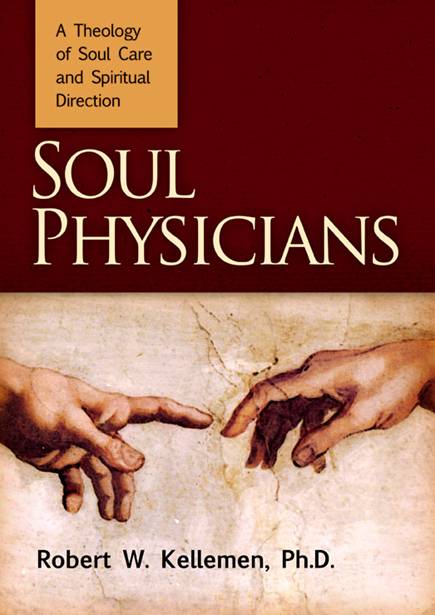
Twenty-five years later, I authored Soul Physicians: A Theology of Soul Care and Spiritual Direction. It’s the remedy for secular psychology.

It’s also the remedy for “take two verses and call me in the morning.” It remedies “secular help” and “shallow help.”

Soul Physicians helps you to help your friends. It empowers you to change lives with Christ’s changeless truth.

Unique Focus: Life’s Seven Ultimate Questions

Soul Physicians explores from the Scriptures seven truths that shape the way we see life and ministry. These truths about life’s seven ultimate questions teach us what makes biblical counseling truly biblical.

• Question 1: “What is truth? Where do I find answers?” Answer 1—The Word: “God’s Word is sufficient, authoritative, profound, and relevant.”

• Question 2: “Who is God?” Answer 2—Community/The Creator: “God is Trinitarian.”

• Question 3: “Who am I”? Answer 3—Creation: “We are created with dignity by God in the image of Christ.”

• Question 4: “What went wrong?” Answer 4—Fall: “We sinfully and foolishly choose god-substitutes over God.”

• Question 5: “Can we change? How do people change?” Answer 5—Redemption: “We must apply our complete salvation to our daily sanctification.”

• Question 6—“Where am I headed? What is my destiny?” Answer 6—Consummation/Glorification: “Heaven is my final home.”

• Question 7—“Can I help? How can I help?” Answer 7—Sanctification/Ministry: “We dispense God’s cure for the soul—grace.”

Unique Features

• Soul Physicians includes a built-in personal application discussion guide to help develop the Christlike character of the biblical counselor.

• Soul Physicians includes a built-in ministry implication discussion guide to help develop the relational competence of the biblical counselor.

• Soul Physicians is written in the language of “theo-drama”—relating theology practically and powerfully to our calling to love God and to love one another.

• Soul Physicians is comprehensive and compassionate—blending robust biblical truth with caring one another application.

• Soul Physicians is perfect for individual and group work. Join the growing number of lay people, pastors, professional Christian counselors, and students who are using Soul Physicians as their twenty-first century manual for understanding people and ministering to them God’s way.

Learn More

To read what others are saying, to download a free sample chapter, and to order Soul Physicians at 40% off, visit my
RPM Ministries (http://www.rpmministries.org/) Soul Physicians page: http://www.rpmministries.org/writing/soul-physicians/

Join the Conversation

Where are you turning to be equipped for one another ministry in the local church that trains you to understand people, diagnose problems, and prescribe solutions—biblically?

Monday, September 07, 2009

Ten Reasons Why We Can Counsel ... Part II

Ten Reasons Why I Believe We Can “Counsel”
Members of the Opposite Gender
Part II: Reasons 6-10

Note: For part one, please visit: http://bit.ly/tXR7y

Introduction (Repeated from Part One)

I’ve been involved in a fascinating and stimulating discussion with a good friend and co-worker in biblical counseling. She believes that the biblical norm mandates that “counseling” must always be between two people of the same gender.

While I do not agree with her view, I do respect her thinking. Also, I certainly believe that there is much power in same gender “counseling.” It is not “wrong” to “counsel” someone of the same gender. I simply do not believe the Bible says that our “counseling” must be exclusively with members of our own gender.

Now, I’m no fool. I understand that I am going to have people “on both sides” at the very least disagreeing with me, some angry at me, and some even calling me a heretic (it wouldn’t be the first time!).

So why discuss this?

It’s a vital issue. It’s a question I am asked a lot. It’s relevant to ministry today.

So…this is a blog. It’s not a book. It’s not a published article. It’s not the final word. The following thoughts are my random ponderings on the issue pretty much as they appeared in the email string generated by my conversation with my friend.

So…the following views are not “hills I am going to die on.” I express them in the hopes of inviting intelligent, loving spiritual conversations. If you disagree with me, please share comments—speaking the truth in love, like a good “Berean.” If you agree with me, but would say things differently or would include additional reasons, please share those.

Here goes. In no particular order, some reasons why I believe we can “counsel” members of the opposite gender.

6. Titus 2: The Specific Context

Some would say that Titus 2 “mandates” and makes the “biblical norm” same gender “counseling.” But what is the context? And I don’t even mean, “is the historical context true for us today?” (which is an issue that some address). I believe the historical context of Titus 2 has application for us today. But what was the context then and what is it now?

Paul is talking about the specific situation of older women who are experienced wives and mothers mentoring younger women for/in the roles of new wives and mothers (and/or wives-to-be and mothers-to-be). So, yes, of course, who better to help a young woman to learn to be a mother and wife than an older woman/mother/wife?

Likewise, who better to help a younger man to learn to be a godly husband/dad than a mature husband/dad?

These are legitimate roles still today. And training women and men for mentoring focused on the home is very necessary and powerful.

I just do not happen to believe that this one passage ever was meant to imply that a woman could never minister to a man. This one passage does not mandate that every one another spiritual friendship or spiritual direction “counseling” interaction must be female-to-female or male-to-male.

7. 1 Timothy 2:11-16: Collaborative Spiritual Conversations

What about “a woman should learn in quietness…”? And, “I do not permit a woman to teach or to have authority over a man”?

These are highly contentious verses. I do not intend to address the full spectrum of issues (such as historical context, application for today regarding local church preaching, etc.). My focus is on what implication, if any, this might have for “counseling” today.

I have studied this whole section in detail. I would translate the lexical meaning of the words in context as, “a woman should not have final authoritative teaching over a man in the church.” (Again, I understand that some would take issue with this translation, with whether this is applicable to the church today, etc. For the sake of argument, I am granting that this is applicable for local church final authoritative preaching.)

However, as I’ve stated, my model of biblical counseling, spiritual friendship, soul care, and spiritual direction is not about final authoritative, directive teaching. It is about collaborative spiritual conversations that seek to relate God’s Word to another person’s life. I do not see 1 Timothy 2:11-15 as prohibiting women from offering spiritual friendship, soul care, or spiritual direction to men.

8. But What About Temptation: Fair Question

Many will say, “It’s not simply about whether women can or should ‘have authority’ over a male. It is about men not counseling women and women not counseling men—primarily because of temptation toward an emotional and/or physical affair.”

Granted, we have all heard the horror stories. However, if we are listening, then we have also heard, increasingly, the horror stories of female “counselors seducing female counselees.” I have a female friend who specializes in counseling women who have been seduced by their female counselors. If she specializes in it, just imagine how often it occurs.

And we have all heard the horror stories of “male pastors seducing male parishioners (especially young boys and teens).”

Thus, we really don’t protect against the temptation toward sinful affairs or emotional attachments simply by “counseling” only male with male or female with female.

What we need are mature, wise males and females who establish the appropriate boundaries and safeguards so that affairs and inappropriate attachments do not develop. Whether it is “formal counseling” or “informal spiritual friendships,” all such relationships must follow established procedures that ensure propriety and integrity.

We ought to empower and equip men and women with the spiritual maturity to engage in what God calls us to do with the wisdom to set appropriate boundaries. Instead, we avoid something good and commanded in Scripture because of something bad that might occur. Out of fear of what might occur in our sinful culture we avoid what the Bible calls us to do to impact our sinful culture.

No one is calling for inappropriate relationships without safeguards. No one is saying that every person is currently ready for one another spiritual friendships with members of the opposite gender. (That’s why the title is “Ten Reasons We Can,” not “Ten Reasons Everyone Must.”) For those without the current personal maturity to handle one another spiritual friendships, the answer is personal discipleship.

9. Potential Sinful Bias: The Potential for Negativity toward Women

I understand that many/most who are against counseling the opposite gender are not “anti-female.” However, in church history and still today in the church there are some who use this topic/issue as one more way to demean, discredit, and marginalize women.

There are men who use “women mentor women” to make women second-class Christians. The attitude can sometimes be, “Women, work with women and children because you are inferior to men.” Such attitudes toward female image bearers is sinful in the sight of God who made us different but equal.

10. Proverbial Wisdom: How God Works

We never build theology on experience. However, proverbial wisdom is a legitimate category of thinking and reflecting.

As I reflect on my life and the lives of many other men and women, I have been greatly ministered to by many godly women. They have been my spiritual friends and biblical counselors in one another ministry and in small group fellowship. Many times other men and women have pointed to these healthy, balanced, ethical, with-integrity, moral, pure relationships as examples to them of how men and women can minister to one another.

I've heard many women, in particular, express how sad it is for them that such fear of impropriety causes men never to have a candid, open conversation with them. They feel as if they are lepers or “Jezebels”—a temptress one must run from. How sad.

God, in His affectionate sovereignty, can choose to use healthy one another spiritual friendships as part of His maturing work in our lives so that we do not engage in sinful relationships. Perhaps it is our Evangelical fear of the opposite sex and the commensurate avoidance of one another spiritual friendships that contribute to the number of affairs we are seeing today.

What Are Your Thoughts?

These are my rambling ponderings.

What are your thoughts?

Ten Reasons Why We Can "Counsel" Members of the Opposite Gender

Ten Reasons Why I Believe We Can “Counsel”
Members of the Opposite Gender
Part I: Reasons 1-5

Introduction

I’ve been involved in a fascinating and stimulating discussion with a good friend and co-worker in biblical counseling. She believes that the biblical norm mandates that “counseling” must always be between two people of the same gender.

While I do not agree with her view, I do respect her thinking. Also, I certainly believe that there is much power in same gender “counseling.” It is not “wrong” to “counsel” someone of the same gender. I simply do not believe the Bible says that our “counseling” must be exclusively with members of our own gender.

Now, I’m no fool. I understand that I am going to have people “on both sides” at the very least disagreeing with me, some angry at me, and some even calling me a heretic (it wouldn’t be the first time!).

So why discuss this?

It’s a vital issue. It’s a question I am asked a lot. It’s relevant to ministry today.

So…this is a blog. It’s not a book. It’s not a published article. It’s not the final word. The following thoughts are my random ponderings on the issue pretty much as they appeared in the email string generated by my conversation with my friend.

So…the following views are not “hills I am going to die on.” I express them in the hopes of inviting intelligent, loving spiritual conversations. If you disagree with me, please share comments—speaking the truth in love, like a good “Berean.” If you agree with me, but would say things differently or would include additional reasons, please share those.

Here goes. In no particular order, some reasons why I believe we can “counsel” members of the opposite gender.

1. “Counseling”: How We Define It

Notice that I have been putting “counseling” in quotation marks. We need to start with what we mean by “counseling.”

I’m big on one another ministry. So for me, “counseling” is simply one another spiritual friendship. I don't see anywhere that the Bible suggests that one another ministry should be exclusively same gender.

Additionally, my model of biblical counseling and spiritual friendship does not focus on final authoritative, directive teaching. It highlights collaborative, “trialogues” where we explore together how God’s Word relates to one another’s lives. I do not believe that this one another practice of collaborative exploration of God’s Word is in any way excluded by any biblical exhortation about women teaching men (see more on this in a subsequent point).

Now, I’m not naïve. I understand that we must address the more formalized relationship of one person who is the recognized “counselor” and one person who is the recognized “counselee.” Even this is not a new issue. Throughout church history people experienced the relationship of a spiritual director to a “directee.”

But again, my definition of soul care and spiritual direction involves a mutual relationship where one person seeks to sustain, heal, reconcile, and guide another person to apply God’s changeless truth to another person’s life.

I do not believe that this spiritual direction practice of collaborative exploration of God’s Word is in any way excluded by any biblical exhortation about women teaching men (see more on this in a subsequent point).

2. Theology of Gender: Genesis 1 and 2 and Creation as Male and Female

I know that some could take our distinct genders to mean that since we are different at the soul level, we should not counsel one another. I would say the opposite.

The idea that it is not good for man/male to be alone, is not only husband/wife, but also male/female. In other words, when we separate by gender in the church, just like when we separate by ethnicity and by age, we lose the beauty of diversity that God has planned.

Males need the unique spiritual friendship insights of females. Females need the unique spiritual friendship insights of males. We need one another.

3. Biblical One Another Exhortations: Let’s Be Consistent

I believe all the one another passages exhort us to offer one another mutual spiritual friendship, soul care, and spiritual direction. None of these passages hint at such commands being directed only toward same gender spiritual conversations.

In fact, when Paul says to speak to one another in psalms, hymns, and spiritual songs, the context is across cultures, across socieo-economic lines, and across genders (Colossians 3:11-16). When Paul says, in this same context, “Bear with each other, and forgive whatever grievances you may have against one another,” surely no one would say, “That only applies to men with men and women with women.”

Paul says in Colossians 3:9, “Do not lie to each other.” Surely no one would say, “Well, that applies only to men with men and women with women.” Yet, a scant few verses later Paul says, “Let the Word of Christ dwell in you richly as you teach and admonish one another with wisdom…” (3:16). Sounds like “counseling.” That’s why I would define biblical counseling as teaching and admonishing one another with wisdom, and I would see Paul commanding all believers to engage in such biblical counseling one with another—including men with women and women with men.

4. Biblical Examples: What Do We See in the Bible?

Jesus and the woman at the well provide a biblical example of a male ministering one-to-one with a female.

The relationship of Aquila and Priscilla to Apollos provides a biblical example of a male/female team mentoring (providing spiritual direction to) a male. Some might say, “Wait, that’s a husband/wife team, so that’s not even in your category of “counseling.” That comment just shows how much we’ve been influenced by modernistic, secular images of what “counseling” is.

Aquila and Priscilla with Apollos is exactly the category of ministry I am addressing. One another spiritual friendships with the opposite gender can include husband and wives ministering to husband and wives. They can include “mixed” small groups. The issue is, can we minister to members of the opposite gender? The issue is not simply the “setting.”

Paul’s list of names in the small house churches in Rome is another example of one another spiritual friendship and small group fellowship being across genders (Romans 16).

I plan to search the Scriptures for further examples.

5. Church History: Women and Men Provided Sacred Friendships to One Another

Anyone who reads my new book, Sacred Friendships (
http://bit.ly/YmaM1) will see how many godly women mentored godly men. The famous Church Fathers were mentored, time after time, by the less-famous, but equally vital, women of the early church. Clearly, women were spiritual directors for the Church Fathers.

I am not saying that history and tradition are equal to inspired Scripture. However, since my interpretation and application of Scripture is not inspired, and neither is yours, I do want to learn from others in church history. And many great Church Fathers, Reformers, and Puritan men benefited from and believed in the role of ministry “across genders.”

Additionally, throughout church history, male pastors provided “counsel” to women. In many cases, we have detailed descriptions of ongoing “counseling” between male pastors and their female parishioners (this is especially true of the Reformers and Puritans).

What Are Your Thoughts?


Thus ends part one of my rambling ponderings.

What are your thoughts?

Be sure to return for part two…

Thursday, July 02, 2009

An Incredible Contribution to the Body of Christ


US Army Chaplain Donald W. Eubank’s Review of
Soul Physicians
“An Incredible Contribution to the Body of Christ”

Dr. Robert Kellemen's “Soul Physicians” is an incredible contribution to the Body of Christ—especially for pastors, counselors, and spiritual directors who seek to base their counsel and ministry on the Word of God. With so much of the published material on soul-care and self-care based upon clinical models and performance/activism based recovery and living, it is refreshing to find a thorough model based upon a Biblical-Trinitarian understanding of the Word of God.

Especially helpful are the study questions at the end of each chapter, providing the pastor, student, counselor, reader the opportunity to reflect upon and apply what is being learned. Dr. Kellemen takes his reader into an honest, thorough, and loving examination of the truth of God's Word that stands against all the secular, narcissistic and self-critical voices that tear down believers.

With great compassion, the pastor-student-spiritual leader, reader is brought to the Cross of Christ and given the tools to believe the only voice that matters, the only truth that matters: His Voice, His Word.

I have personally benefited greatly from Dr. Kellemen's work, and am incorporating this model of Sustaining, Healing, Reconciling and Guiding into my preaching, teaching, counseling, graduate studies, and writing. Most of all, I am growing in God's grace, and believing in His great love, forgiveness, and healing work in my own heart.

I strongly recommend this book, and the companion study, “Spiritual Friends,” for all who seek to encourage other believers—especially pastors and Christian counselors.

Please feel free to contact me at
dweubank@gmail.com.

In Christian Service and Ministry,

Donald W. Eubank, US Army Chaplain

*To Learn More about Soul Physicians:
http://tinyurl.com/d8grf6

*To Order Soul Physicians:
http://tinyurl.com/d96hc6

*Read a Sample Chapter of Soul Physicians:
http://tinyurl.com/npfwsh

*View the Review on Amazon:
http://tinyurl.com/lzs6ne

Wednesday, June 17, 2009

Not Conclusion, but Commencement

Why Some Biblical Counseling Is Only Half Biblical!
Part Thirteen: Not Conclusion, but Commencement

*Note: If you’re disappointed that I’m saying that some biblical counseling is only half biblical, then please read my comments at the end of my first post in this series: http://tinyurl.com/n8k799.

My Premise: Half Biblical Counseling

Some modern biblical counseling considers the seriousness of sin—sinning, but spends much less time equipping people to minister to the gravity of grinding affliction—suffering. When we provide counseling for sin, but fail to provide counseling and counselor training for suffering, then such biblical counseling is only half biblical.

My Premise Expanded: One-Quarter Biblical Counseling

Even when some biblical counselors do address suffering and sufferers, their focus seems to be upon “directive” counseling that exhorts the suffering Christian to be faithful. When we provide only or primarily directive exhortations to faithfulness, but fail to engage in biblical “sustaining” (empathy, compassionate commiseration, sustaining, weeping with those who weep, sharing Scripture and soul, “climbing in the casket”), and when we fail to engage in biblical “healing” (encouragement, collaborative exploration of biblical responses, trialogues, spiritual conversations, scriptural explorations, “celebrating the resurrection”), then such biblical counseling is only one-quarter biblical. (For a fuller development of biblical and historical sustaining and healing, please see Spiritual Friends: http://tinyurl.com/coh23r).

Not Conclusion, but Commencement

This thirteen-part series could easily be month-long. In fact, it could be book-long.

However, it’s time to conclude.

No. Not conclude, but commence.

Even in “final counseling sessions,” I’ve never liked the word “terminate”! It’s like we are dispensing with our spiritual friend.

I prefer the word “commencement” for the final official meeting, because we are celebrating with our spiritual friend his or her commencing a new beginning as he or she connects more deeply with Christ and the Body of Christ and more fully reflects the image of Christ.

So also, in this blog mini-series, I don’t like the word “conclude.” That could imply that I believe I have cornered the market on the right way to do biblical counseling. That’s not my mindset at all. In fact, you’ll note that in this series and throughout my speaking, writing, and consulting, I quote a great deal from “that great cloud of witnesses”—biblical and historical.

The ideas presented in this series are not “Kellemen’s concepts. I believe that soul care for suffering (sustaining and healing) and spiritual direction for sin (reconciling and guiding) combine to offer a biblically and historically-based Christ-centered, comprehensive, compassionate, and culturally-informed approach to biblical counseling and spiritual formation.

That leads to another reason I prefer “commencement” over “conclude” or “conclusion.” This is still just one person’s “take” on what Church history and the Bible have to say about “comprehensive” biblical counseling.

What Say Ye?

I’ve had many, many emails, Twitter messages, Facebook posts, etc., about this series. It’s been fantastic and fascinating.

Let the conversation continue; let it commence.

Let’s all “graduate” to a Berean-like discussion and application of truly comprehensive biblical counseling.

Let’s stir one another on to love and good deeds.

Let’s encourage one another as we see the day approaching.

Let’s sustain, heal, reconcile, and guide one another.

Let’s minister to those who are facing suffering and to those who are battling besetting sins.

Let’s equip pastors, lay people, and professional Christian biblical counselors with and for comprehensive ministry.

Let’s carefully define “biblical counseling” to nuance and represent what the Bible means when it talks about one another Body life ministry.

As I said, let the conversation continue; let it commence.

Monday, June 08, 2009

Why White Biblical Counselors Need the Black Church


Why Some Biblical Counseling Is Only Half Biblical!
Part Six:
Why White Biblical Counselors Need the Black Church

*Note: If you’re disappointed that I’m saying that some biblical counseling is only half biblical, then please read my comments at the end of my first post in this series: http://tinyurl.com/n8k799.

My Premise

Some modern biblical counseling considers the seriousness of sin—sinning, but spends much less time equipping people to minister to the gravity of grinding affliction—suffering. When we provide counseling for sin, but fail to provide counseling and counselor training for suffering, then such biblical counseling is only half biblical.

Why and How We Lost Our Way

So, why do I think biblical counseling lost its way? What historical, cultural, and personal realities help to explain why some modern biblical counseling is only half biblical?

E. Brooks Holifield, in his excellent study, A History of Pastoral Care in America (
http://tinyurl.com/mo6ww8), demonstrates how pastoral ministry moved from a focus on salvation to a focus on self-realization. It moved from Christ to self, from Scripture to humanism.

In my own study of pastoral counseling in America, I’ve found that biblical counseling from the end of the Civil War (1865) to the passage of the Civil Rights Act (1964) moved from a focus on suffering and sin to a focus on self.

Interesting, isn’t it, that for these 100 years, framed by the Civil War and Civil Rights, we lost our way with Christian counseling and pastoral ministry.

In coming posts, I’ll share about the impact of liberalism and fundamentalism on pastoral ministry during this era. I’ll also describe how the modern biblical counseling movement pulled the pendulum back to a focus on sin, but not always to an equal focus on suffering.

Why White Biblical Counseling Needs the Black Church

Here’s my conviction about why pastoral ministry moved from suffering and sin to self, and why modern biblical counseling pulled the focus back to sin but not as much to suffering: church segregation.

From the end of the Civil War to the Civil Rights Act, and continuing to today, Sunday morning remains the most segregated hour in America. We lose so much by this church segregation.

White Evangelical biblical counselors lose the amazing, beautiful, biblical blending of suffering and sin that so characterizes the Black Evangelical Church from its inception in enslavement right up to our day.

In my book, Beyond the Suffering: Embracing the Legacy of African American Soul Care and Spiritual Direction, readers enjoy 100s of lively narratives that consistently depict how the Evangelical Black Church never compartmentalized suffering and sin. Instead, the Black Church consistently integrated, mingled, blended, and kept united soul care for suffering and spiritual direction for sinning.

Samples and the Full Meal

If you want to read a free sample chapter on the Black Church’s personal ministry of the Word, go here:
http://tinyurl.com/nykc3h.

If you want your own copy of the entire book in order to be equipped and empowered by African American biblical counselors, go here:
http://tinyurl.com/cm96x6.

Conclusion

Because we White Evangelical biblical counselors pulled the pendulum back from a focus on self and because we did so in segregation from our Black brothers and sisters, we compartmentalized sin and suffering and ignored the development of biblical counseling approaches that help us to move beyond the suffering.

Where Do We Go From Here?

In my next post, I’ll share what White Evangelical male biblical counselors lost when we minimized the contribution of female soul care-givers and spiritual directors.

Thursday, June 04, 2009

Why Some Biblical Counseling Is Only Half Biblical, Part Four

Why Some Biblical Counseling Is Only Half Biblical!
Part Four: The Great Cloud of Biblical Counseling Witnesses

*Note: If you’re disappointed that I’m saying that some biblical counseling is only half biblical, then please read my comments at the end of this post.

My Premise

Some modern biblical counseling considers the seriousness of sin—sinning, but spends much less time equipping people to minister to the gravity of grinding affliction—suffering. When we provide counseling for sin, but fail to provide counseling and counselor training for suffering, then such biblical counseling is only half biblical.

The Great Cloud of Biblical Counseling Witnesses

The Bible exhorts us to honor and learn from those who have gone before us:

“Remember the days of old; consider the generations long past. Ask your father and he will tell you, your elders, and they will explain to you” (Deuteronomy 32:7).

“Stand at the crossroads and look; ask for the ancient paths, ask where the good way is, and walk in it, and you will find rest for yours souls” (Jeremiah 6:16a).

“Therefore, since we are surrounded by such a great cloud of witnesses, let us throw off everything that hinders and the sin that so easily entangles, and let us run with perseverance the race marked out for us” (Hebrews 12:1).

So, how did the great cloud of biblical counseling witnesses in Church history deal with suffering? Well, for the detailed answer, please refer to:

Soul Physicians (
http://tinyurl.com/d96hc6),

Spiritual Friends (
http://tinyurl.com/qh5tj4),

Beyond the Suffering (
http://tinyurl.com/cm96x6),

Martin Luther’s Pastoral Counseling (
http://tinyurl.com/ovw588),

Sacred Friendships (
http://tinyurl.com/ql8fqc).

The Readers’ Digest Version

As Church historians have probed the history of personal ministry, they have categorized all “people-ministry” using the four tasks of sustaining and healing for suffering, and reconciling and guiding for sinning. Though different terms were used in different eras, these historians have found consistent categories, definitions, and descriptions. Historically, comprehensive biblical care of people always involved the twin functions of soul care for suffering and spiritual direction for sinning through the four ministries of sustaining, healing, reconciling, and guiding.

John McNeil’s A History of the Cure of Souls traces the art of soul care throughout Church history and shows that Christians always provided ministry for suffering and sin.

“Lying deep in the experience and culture of the early Christian communities are the closely related practices of mutual edification and fraternal correction.”

Speaking of the Apostle Paul, McNeil notes:

“In such passages we cannot fail to see the Apostle’s design to create an atmosphere in which the intimate exchange of spiritual help, the mutual guidance of souls, would be a normal feature of Christian behavior.”

Throughout his historical survey, McNeil explains that mutual edification involves soul care through the provision of sustaining (consolation, support, and comfort) and healing (encouragement and enlightenment) for suffering. Fraternal correction includes spiritual direction through the provision of reconciling (discipline, confession, and forgiveness) and guiding (direction and counsel) for sinning.

Historians of soul care, Clebsch and Jaekle, found that pastoral care has historically involved “helping acts, done by representative Christian persons, directed toward the healing, sustaining, guiding, and reconciling of troubled persons whose troubles arise in the context of ultimate meanings and concerns” (Clebsch and Jaekle, Pastoral Care in Historical Perspective, p. 4).

How extensive has the twin ministries of soul care for suffering and spiritual direction for sinning been?

“The Christian ministry of the cure of souls, or pastoral care, has been exercised on innumerable occasions and in every conceivable human circumstance, as it has aimed to relieve a plethora of perplexities besetting persons of every class and condition and mentality. Pastors rude and barely plucked from paganism, pastors sophisticated in the theory and practice of their profession, and pastors at every stage of adeptness between these extremes, have sought and wrought to help troubled people overcome their troubles. To view pastoral care in historical perspective is to survey a vast endeavor, to appreciate a noble profession, and to receive a grand tradition” (Clebsch and Jaekle, p. 1).

Have we in the biblical counseling movement received or ignored this grand tradition of biblical counseling both for suffering and for sin?

Where Do We Go from Here?

Tomorrow, I’ll address the question, “What might it look like to train pastors and lay people to be soul physicians and spiritual friends who deal with both suffering and sin?”

*Note: Why I Am Addressing This Topic

All who have followed my ministry know that I am a bridge-builder and not a wall-builder. You might wonder then, “Bob, why blog about something that is surely to be controversial?”

Those who follow my ministry also know that I equip God’s people to change lives with Christ’s changeless truth through comprehensive, compassionate, and culturally-informed biblical counseling and spiritual formation.

Biblical counseling that fails to deal with suffering, fails the test of comprehensive, compassionate, and culturally-informed biblical counseling. I would be a hypocrite to my calling if I remained silent.

Others might wonder, “Are you talking about a particular ‘model’ of modern biblical counseling, or about a particular person or persons who are writing today?”

No. I am not. This is not an attack against. These blogs are not directed toward any one person or group.

These blogs are directed to all of us—myself included—who love biblical counseling. They are for all of us—myself included—who need good Bereans to help us to assess how biblical or unbiblical our approaches to biblical counseling truly are. I write to help, not to hurt. I write to equip, not to attack. I write to start a conversation, not to finish one.

Please join the conversation.

Tuesday, June 02, 2009

Why Some Biblical Counseling Is Only Half Biblical: Whatever Happened to Suffering?

Why Some Biblical Counseling Is Only Half Biblical!
Part Two: Whatever Happened to Suffering?

*Note: If you find yourself upset that I am saying that some biblical counseling is only half biblical, then I would ask you to be sure to read my comments at the end of this blog post. Thanks!

My Premise

Some modern biblical counseling considers the seriousness of sin—sinning, but spends much less time equipping people to minister to the gravity of grinding affliction—suffering. When we provide counseling for sin, but fail to provide counseling and counselor training for suffering, then I am of the conviction that such biblical counseling is only half biblical!

Whatever Happened to Sin?

Some might object, “So, are you watering down sin? Are you saying that Christ came to heal our suffering and not to save us from our sin? Are you saying that our primary problem is our suffering rather than our sin?”

No. Actually, anyone who omits suffering in their biblical counseling is watering down sin!

Unlike the Church Fathers, unlike the Reformers, unlike the Puritans, and most importantly, unlike the Bible, we tend to make Christ’s victory over sin predominantly individual and personal, rather than also corporate and cosmic. Christ died to dethrone sin. Christ died to defeat every vestige of sin. Christ died to obliterate every effect of sin—individual, personal, corporate, and cosmic—including death and suffering, tears and sorrows, mourning, crying, and pain.

That’s why twice in Revelation, John shares the blessed promise that, “God will wipe away every tear from their eyes. There will be no more death, or mourning or crying or pain, for the old order of things has passed away” (Rev. 21:4; see also Rev. 17:7). Christ died to defeat every enemy, every evil, including the devil who holds the power of death (Hebrews 2:14-15), and the last enemy—suffering and death (1 Corinthians 15:25).

Yes, of course, in the evangelism and discipleship process, our first joy is helping someone who does not know Christ to surrender to Christ so his or her sins are forgiven. And, of course, as we disciple one another we want to help each other to grow in their victory over sin’s tentacles.

Whatever Happened to Suffering?

However, our calling from Christ is also to minister to one another concerning sin’s effects—including suffering. That’s why we are called to weep with those who weep (Romans 12:15). That’s why we are called to comfort one another (nine times in 2 Corinthians 1:3-11). That’s why the New Testament calls us to a parakaletic ministry (to come alongside to help, comfort, and encourage one another in suffering). That’s why the New Testament uses the word parakaletic over 100 times!

Christ’s Cross defeated our deprivations—the evils we suffer, and our depravity—the sins we commit. Frank Lake explains Christ’s victory over both:

“The very powers of evil, standing in the shadows behind ‘the mystery of iniquity’ and ‘the mystery of suffering,’ were dethroned by Christ’s active, obedient submission to their onslaught. Therefore, He reconciles to God by His Cross not only sinners, but sufferers. Not only memories of culpable sin which condemn the conscience, but the memories of intolerable affliction which condemn faith as a delusion, these too are confronted by the fact of Christ’s Cross. These passive evils, which are not of the soul’s own making, are not accessible to a pastoral care which can talk only in terms of the forgiveness of sins. Such sufferers are usually not insensitive to their status as sinners. They have sought God’s forgiveness. But, like Job, they complain of the comforters whose one-track minds have considered only the seriousness of sin, and not the gravity of grinding affliction” (Lake, Clinical Theology, pp. 24-25, emphasis added).

Lake makes several astute points.

1. Academic Theology: As we have said, Christ’s died to defeat sin and sins’ effect—death and suffering, depravity and deprivation.

2. Spiritual Theology: “Passive evils” are what some today called “innocent suffering.” Not that anyone is innocent (or sinless), but that some suffering is not directly due to our own personal sin: the woman who is raped, the child who is abused, the cancer patient, the parents of a dying child, the victim of a drunk-driving accident, etc.

3. Pastoral Theology: Counseling such individuals, they typically understand that they are sinners. They want to know if their pastors, counselors, and spiritual friends understand that they are sufferers! If we do not, if we preach them a sermon on sin, then we are like Job’s miserable counselors with their false theology that God is a tit-for-tat God and that every incident of suffering is directly related to one’s personal sin. (See John 9:1-3 for Jesus’ theology of innocent suffering/sufferers.)

I don’t know about you, but I don’t want to be known as a miserable counselor. I want to be known as a comprehensive, compassionate, and culturally-informed biblical counselor!

Frank Lake again explains what that looks like.

“Clinical pastoral care has, as its introduction, the task of listening to a story of human conflict and need. To the extent that our listening uncovers a situation which borders the abyss or lies broken within it, we are nearer to the place where the Cross of Christ is the only adequate interpretative concept” (Frank Lake, Clinical Theology, pp. 18-19).

Sin and suffering—they both offer us the opportunity to provide wisdom found only in the Gospel. When we skirt our biblical counseling responsibility to minister to the suffering, we limit the limitless power and infinite relevancy of the Cross of Christ.

When we talk about the sufficiency of Scripture but in practice deny the relevancy of Scripture to address human suffering, then we have watered down sin and we have diminished the death, burial, and resurrection of Christ!

When we understand the Cross of Christ, then we practice biblical counseling that combines the sufficiency and the relevancy of Scripture and that unites counseling for the sufferer and for the sinner.

Where Do We Go from Here?

Tomorrow we’ll start addressing the following vital questions.

*So, has anyone else in Church history ever said we must focus on both sin and suffering?

*So, what would it look like to focus on both sin and suffering?

*So, what’s your definition/description of truly biblical counseling?

*Note: Why I Am Addressing This Topic

All who have followed my ministry know that I am about bridge-building and not about wall-building. You might wonder then, “Bob, why blog about something that is surely to be controversial?”

Those who follow my ministry also know that I am about equipping God’s people to change lives with Christ’s changeless truth through comprehensive, compassionate, and culturally-informed biblical counseling and spiritual formation.

Biblical counseling that fails to deal with suffering, fails the test of comprehensive, compassionate, and culturally-informed biblical counseling. I would be a hypocrite to my calling if I remained silent.

Others might wonder, “Are you talking about a particular ‘model’ of modern biblical counseling, or about a particular person or persons who are writing today?”

No. I am not. This is not an attack against. These blogs are not directed toward any one person or group.

These blogs are directed to all of us—myself included—who love biblical counseling. They are for all of us—myself included—who need good Bereans to help us to assess how biblical or unbiblical our approaches to biblical counseling truly are.

I write to help, not to hurt. I write to equip, not to attack. I write to start a conversation, not to finish one.

Please join the conversation.

Monday, May 11, 2009

Change Lives with Christ's Changeless Truth


More Praise for Soul Physicians

To Order Your Copy at 40% Off, Please Visit: http://tinyurl.com/d96hc6

“Soul Physicians is no naїve verse-to-issue, sin-to-solution, mix-and-match biblical counseling reference. This is rich theology relayed in readable terms for grace-based care as shared by a stellar scholar-teacher. Soul care worthy of the title ‘Christian’ must address the core of shalom, the cancer of shame, and the destiny of the sacred. Soul Physicians passionately brings that holistic biblical redemptive story line to bear on the everyday life stories common in the practice of discipleship, Christian counseling, and spiritual formation.”
—Stephen P. Greggo, PhD., Professor of Counseling, Trinity Evangelical Divinity School

“Dr. Kellemen’s book came as a great refreshment to me. It was both clear and comprehensive, elucidating a theological foundation for counseling ministry based on a solid biblical hermeneutic. This book is beneficial for a multitude of audiences: from the lay counselor, to the pastor, to the licensed clinician. Its impact is to clarify the need, mandate, and roots of personal ministry taken from the Word of the One who created all. Soul Physicians addresses all the imperative issues of our fallen and redeemed state without trying to simplify the complexities of sanctification. It should not be considered merely a textbook contribution to the literature on biblical counseling, but instead a foundation for a curriculum. I require it for all my biblical counseling students.”
—Lynelle Buchanan, Professor of Counseling, Baptist Bible College

“Soul Physicians swaps shop-worn theology for biblically sound, compassionate soul care. Dr. Bob Kellemen skillfully invites readers into the huddle where academic theology is spelled out and onto the field where practical theology is lived out. It’s a privilege to endorse such a fine work.”
—Tammy Schultz, Ph.D., LMHC; Department Chair, Graduate School in Counseling, Grace College

“Soul Physicians is an excellent resource for counselors, pastors and students who believe that knowing and loving people in our world begins with knowing and loving God and His Word. The confluence of Dr. Kellemen’s comprehensive grasp of the story of redemption in Scripture and his practical wisdom about people with problems makes this book a unique and important contribution for those that want to counsel from a distinctively Christian perspective.”
—Sam R. Williams, Ph.D., Professor of Counseling, Southeastern Baptist Theological Seminary

“The tremendous issues that people face today call for a work that skillfully guides those who labor in helping Christians reach maturity in Christ. Soul Physicians meets that need and will be of great value to pastors, professional Christian counselors, students, and lay people. Dr. Kellemen’s credentials both in the theological world and the world of counseling make him uniquely qualified to produce a work like Soul Physicians. His work will prove to be invaluable in the field of Christian counseling.”
—Dr. Homer Heater, Jr., President Emeritus, Washington Bible College

“Soul Physicians is a ‘theological breath of fresh air.’ This comprehensive guide offers a wealth of knowledge that translates theology into everyday human relationships. It catapults the reader into confidently connecting with people soul-to-soul. My life and ministry will never be the same after reading Soul Physicians.”
—Pastor Dwayne Bond, Senior Pastor, Wellsprings Church

“Soul Physicians captures the essence of Christian soul care and spiritual direction. A unique balance of biblical theology and compassionate spiritual friendship makes Soul Physicians vital for the pastor, Christian counselor, or student of counseling. Soul Physicians will revolutionize the study of counseling at higher learning institutions that embrace the Christian worldview in their counseling programs.”
—Douglas McCracken, Professional Christian Counselor, Safe Harbor Counseling

“Personally, I can attest to the challenge of facing deep hurts and overcoming them through the use and application of Soul Physicians’ principles. Professionally, as a biblical counselor, pastor’s wife, and teacher, God has allowed me to use Soul Physicians as an equipping tool to mentor women. My classes using these concepts have now included over 500 women who testify that Soul Physicians deepened their personal maturity and equipped them to more powerfully minister to others.”
—Sister Ellen Barney, Women’s Ministry Director, New Antioch Baptist Church

“Soul Physicians revives the timeless tradition of soul care in the Christian community. If you are longing for a deeper relationship with the Lord and others, read on. If you desire to see others as God sees them, keep reading. If you want to relate God’s Word to suffering and sinning as you interact with image bearers, Soul Physicians is for you. If you’re willing to allow God to pierce your heart with His holiness and grace, then Soul Physicians will transform you and those you encounter.”
—Susan Ellis, Author of Sacred Friendships

“Soul Physicians offers theological depth leading to personal maturity. It unlocks a systematic, exhilarating understanding of how God created us to relate, think, choose, and feel in an imperfect world as redeemed Christians. Providing a myriad of scriptural tools, Soul Physicians equipped me to understand suffering and sin, enabling me to connect with people who are impacted by the evils of suffering and with those who are dealing with personal sin issues. In Soul Physicians, Dr. Kellemen shares his years of experience, diligent research, and dependence on the Spirit to endow counselors, pastors, students, and lay people with a scriptural blueprint to become more soul aware and, in turn, empower others with God’s profound grace.”
—Robin Shell, Graduate Counseling Student

“As a pastor and a church planter, I resonate with the major theme found in Soul Physicians—how to change lives with God’s changeless truth. The principles found in Soul Physicians are so practical and life-giving that I am using them in the foundation of our church plant. Solidly biblical and refreshingly relational, Bob combines his wealth of experience as a pastor, shepherd, coach, and counselor with his strong exegetical skills to outline an easily understandable theology of counseling that masterfully addresses the human soul’s need for healing from both suffering and sin.”
—Pastor Tom Gill, Church Planter, Life in the Balance Ministries

“Not only is Soul Physicians based upon solid exegesis and deep theological convictions, it is also presented creatively and insightfully. God will use these truths to transform readers into greater lovers of God and better lovers of God’s people. Personally, I ‘understood’ truth before I was introduced to these concepts, but now God is giving me His heart through Soul Physicians. Undoubtedly, I am more like Jesus and better equipped to minister for Jesus because of Soul Physicians.”
—Chris Boucher, Counseling Professor, Capital Bible Seminary

To Order Your Copy at 40% Off, Please Visit:
http://tinyurl.com/d96hc6

Soul Physicians: A Theology of Soul Care and Spiritual Direction

Understand People, Diagnose Problems, and Prescribe Solutions—Biblically!

Join the growing number of lay people, pastors, professional counselors, and students who are using Soul Physicians as the twenty-first-century theology manual for Christian counseling. Learn our Great Physician’s authoritative truth about:

Nourishing the Hunger of the Soul: Preventative Medicine—God’s Word

Knowing the Creator of the Soul: The Great Physician—The Trinity

Examining the Spiritual Anatomy of the Soul: People—Creation

Diagnosing the Fallen Condition of the Soul: Problems—Fall

Prescribing God’s Cure for the Soul: Solutions—Redemption

Envisioning the Final Healing of the Soul: Home—Glorification

Dispensing God’s Care for the Soul: Spiritual Friends—Sanctification

Robert W. Kellemen, Ph.D. LCPC, is Chairman of the Master of Arts in Christian Counseling and Discipleship Department at Capital Bible Seminary where he has field-tested Soul Physicians for a decade. In his three pastoral ministries, Bob has trained hundreds of lay people as soul physicians. As a Licensed Clinical Professional Counselor, he brings a practitioner’s sensitivity to his writing. Bob is also the author of Spiritual Friends, Beyond the Suffering, and Sacred Friendships.

Soul Physicians, Part I


Praise for Soul Physicians

To Order Your Copy at 40% Off, Please Visit: http://tinyurl.com/d96hc6

“Soul Physicians is a great and unique book: deeply shaped by Scripture; promoting of a personal engagement with biblical teaching and with Christ; challenging and focused against sin; but practical, gentle in spirit, and discerning in method and counseling skill. The book itself exemplifies what a biblical counselor should be like. Its use of a redemptive-historical structure (creation-fall-redemption-consummation) alone is worth the price of the book, since the value of this framework has not yet been fully realized in Christian counseling. It should be widely used in counseling programs and local churches that value the Bible.”
—Eric Johnson, Ph.D., Professor of Pastoral Theology and Biblical Psychology, The Southern Baptist Theological Seminary

“The Puritan writers were excellent counselors because they were also excellent theologians. Dr. Kellemen follows in that rich tradition; his quality leadership in counselor education flows from the depth of his theological underpinnings. Few books on counseling today are true to biblical hermeneutics; Soul Physicians is one significant exception, which is why I am using it as a required text for our course exploring Methods of Biblical Change.”
—Dr. Dow Pursley, Director of Counseling Programs, Baptist Bible College Graduate School

“Soul Physicians is an outstanding contribution to the fields of counseling and pastoral theology. It has succeeded remarkably in uniting counseling theory and the authority of Scripture. I know of no other work that is so insightful and equally practical. I strongly recommend Soul Physicians to pastors, educators, and everyone who is interested in intensifying practical sanctification.”
—Dr. Don Fowler, Professor of Biblical Studies, Liberty University

“Unlike many other books currently available, Soul Physicians can easily serve as a primary and comprehensive resource for those studying the theology of soul care. Dr. Kellemen’s innovative approach places the theology of soul care in the appropriate context of the Christian’s spiritual formation and discipleship. The text provides the vital addition of significant questions for the reader’s study and reflection, thus providing further options for classroom use in plenary or small group discussion.”
—Dr. Mara Crabtree, Associate Professor of Spiritual Formation and Christian Spirituality, Regent University School of Divinity

“Soul Physicians is a truly meaningful and valuable treatment of the theological, spiritual, and psychological dimensions of counseling, soul care, spiritual formation, and the relationships between them. It can serve as a textbook, a personal study guide, or a resource handbook for those desiring to approach people-helping from a thoroughly Christian and biblical viewpoint.”
—Dr. Richard Averbeck, Professor of Old Testament and Semitic Languages, Trinity Evangelical Divinity School; Director of the Spiritual Formation Forum

“In Soul Physicians, Robert W. Kellemen explores seven key biblical categories for developing a theology of soul care and spiritual direction. The result is a thoroughly biblical systematic theology written with the insights and illustrations of a mental health professional—appropriately constructed against the backdrop of a relational emphasis. I highly recommend this book as an important reference for evangelical pastors, counselors (both professional and lay), and other soul care providers.”
—Gary W. Moon, M.Div., Ph.D., Vice President and Chair of Integration, Psychological Studies Institute, Author of Falling for God

“In Soul Physicians, Dr. Kellemen captures the essence of delivering practical ministry in the real world. His teachings are applicable to the ‘every member a minister’ approach to caring for others, as well as being foundational for the professional Christian counselor. This material has enabled me to incorporate solid biblical principles into my counseling practice.”
—Melvin Pride, Director of Strategic Planning, Southern Baptist Convention of Maryland and Delaware

“The information in Soul Physicians, the perspective it gives on life, and the passion with which it is written has been the catalyst for my walk with Christ soaring to an entirely new level. The framework for life it presents has deepened my understanding of who Jesus is and provided me a clearer picture of God’s plan for my personal life and pastoral ministry. It has greatly enhanced my understanding of people and equipped me to powerfully minister to them.”
—Pastor John Heater, Youth Pastor, Forcey Memorial Church

“I read Soul Physicians expecting to learn many facts that I would need to become an excellent Christian counselor. God’s plans were that and so much more. He used Soul Physicians to speak truth into the deepest regions of my heart. It is naїve of us to plan to make an impact on those who are hurting, and hurting others, without first dealing with those parts of ourselves. Soul Physicians gave me a thorough knowledge of the subject, an increased self-awareness, and a realization of the many sensitive areas I face as I minister to God’s people. Soul Physicians is an apt title for a work that so eloquently presents the application of the Word of God to human suffering and sin.”
—Terri Polm, Lay Counselor

To Order Your Copy at 40% Off, Please Visit:
http://tinyurl.com/d96hc6

Soul Physicians: A Theology of Soul Care and Spiritual Direction

Understand People, Diagnose Problems, and Prescribe Solutions—Biblically!

Join the growing number of lay people, pastors, professional counselors, and students who are using Soul Physicians as the twenty-first-century theology manual for Christian counseling. Learn our Great Physician’s authoritative truth about:

Nourishing the Hunger of the Soul: Preventative Medicine—God’s Word

Knowing the Creator of the Soul: The Great Physician—The Trinity

Examining the Spiritual Anatomy of the Soul: People—Creation

Diagnosing the Fallen Condition of the Soul: Problems—Fall

Prescribing God’s Cure for the Soul: Solutions—Redemption

Envisioning the Final Healing of the Soul: Home—Glorification

Dispensing God’s Care for the Soul: Spiritual Friends—Sanctification

Robert W. Kellemen, Ph.D. LCPC, is Chairman of the Master of Arts in Christian Counseling and Discipleship Department at Capital Bible Seminary where he has field-tested Soul Physicians for a decade. In his three pastoral ministries, Bob has trained hundreds of lay people as soul physicians. As a Licensed Clinical Professional Counselor, he brings a practitioner’s sensitivity to his writing. Bob is also the author of Spiritual Friends, Beyond the Suffering, and Sacred Friendships.

Monday, April 27, 2009

Foundations for Soul Care: A Christian Psychology Proposal


Foundations for Soul Care: A Christian Psychology Proposal


· Author: Eric L. Johnson, Ph.D.
· Publisher: IVP Academic (September, 2007)
· Category: Biblical Counseling, Christian Psychology

Discerning Reader Editorial Review

Reviewed 04/23/09 by Bob Kellemen, Ph.D.

Recommended: A core text that expands the conversation regarding what makes Christian psychology truly Christian and biblical counseling truly biblical.

Review: What Makes Christian Psychology Truly Christian?

Writing before the advent of modern secular psychology, Old Testament scholar and church historian, Franz Delitzsch, noted that “biblical psychology is no science of yesterday. It is one of the oldest sciences of the church” (A System of Biblical Psychology, 1861, p. 3).

His assertion is vital to remember before any knee-jerk reaction to the subtitle of Eric Johnson’s book, Foundations for Soul Care: A Christian Psychology Proposal. It is not oxymoronic to link “Christian” and “psychology,” or “biblical” and “psychology.”

Dr. Eric Johnson is Professor of Pastoral Theology at The Southern Baptist Theological Seminary, and Founding Director of the Society of Christian Psychologists. Dr. Johnson has committed his life and ministry to the epic task of answering one foundational question. “What would psychology look like if it were built solely upon a Christian understanding of human nature?

Foundations for Soul Care provides his answer, his opus. For Johnson, “psychology” is the study of the soul in order to care for the soul based upon the inspired wisdom of the Creator of the soul.

Wisdom, as Solomon uses it in Proverbs, is what Johnson offers in Foundations. Johnson combines scriptural interpretation, the history of Christian soul care, and astute life observation to develop a deep, thinking, intellectual, complex (in the best senses of those words) approach to Christian psychology.

Yet, like Proverbs, Johnson’s work is eminently practical in its purpose. He shows how biblical insights about human nature lead to Christlikeness—maturity in reflecting the Creator of human nature. Thus, Foundations refuses to offer a humanistic perspective. Rather, Christian psychology, in the hands of Johnson, is all for the higher (highest) purpose of glorifying God by helping others to reflect God’s glory.

Johnson writes courageously. He places himself outside any one “camp,” which, of course, means that those from all the various camps may take issue with him (and take aim at him) for assorted reasons. Positively, Johnson’s deep thinking should motivate members of every “camp” toward profound reflection.

Johnson presents a detailed overview of the reigning paradigms in the field of Christian counseling. Building on their respective strengths, he seeks to move beyond the current impasse in the field to develop a more unified and robustly Christian understanding. He proceeds to offer a new framework for the care of souls that is comprehensive in scope, and flows from a Christian understanding of human beings. The intended end result is a distinctly Christian version of psychology: understanding people, diagnosing problems, and prescribing God’s solutions—biblically.

As a professor, speaker, and writer on soul care and spiritual direction, I highly recommend Foundations as a core text that expands the conversation regarding what makes Christian psychology truly Christian and biblical counseling truly biblical. Readers won’t agree with every point, but with eminent scholarship Johnson thoroughly addresses every point worth discussing. All serious Christian teachers, students, and practitioners in the fields of psychology, counseling, soul care, and spiritual direction need to engage this text thoughtfully.

Sunday, April 19, 2009

Nourishing the Hunger of Your Soul: Introduction


Nourishing the Hunger of Your Soul: Introduction

Be nourished by some core concepts from the Introduction to Soul Physicians.

“What would a model of biblical counseling look like that was built solely upon Christ’s gospel of grace?” (Soul Physicians, p. 3).

“Love is not enough. Truth is not enough. Love and truth must kiss” (Soul Physicians, p. 5).

“My passion is to infuse biblical counseling with Christian theology to change lives with Christ’s changeless truth” (Soul Physicians, p. 7).

“To what degree do you have confidence in the relevancy and potency of God’s Word in your life?” (Soul Physicians, p. 8).

“How do you evidence your confidence in God’s Word to help you when you are suffering?” (Soul Physicians, p. 8).

“How do you evidence your confidence in God’s Word to help you to have victory over sin and to grow in sanctification?” (Soul Physicians, p. 8).

“Do you agree or disagree that modern Christian counseling has lost its confidence in the relevancy and potency of God’s Word?” (Soul Physicians, p. 9).

“To what degree is your biblical counseling theologically informed?” (Soul Physicians, p. 9).

“What could you do to infuse your soul care and spiritual direction with Christian theology?” (Soul Physicians, p. 9).

“What makes biblical counseling biblical? What makes soul care and spiritual direction Christian?” (Soul Physicians, p. 9).

Wednesday, April 08, 2009

Learn How to Change Lives

Are You Ready to Learn How to Change Lives
with Christ's Changeless Truth?

Do you sometimes struggle to know how to use God's Word powerfully, effectively, and lovingly to change lives?

Change that with:

Changing Lives: What to Do After the Hug.

In fifty pages, I have creatively condensed a lifetime of ministry equipping.

Learn how to care like Christ through comprehensive, compassionate, and culturally-informed biblical counseling and spiritual formation.

For just $7.50 you can order your E-Document as a Word document at:

http://www.rpmbooks.org/credit_card_orders.html#hug

You will learn how to view the Bible as the foundation for one another ministry through six practical spiritual life principles from God's Word.

You will learn how to use the Bible in your personal ministry through four practical relational competencies for biblical counseling.

Twelve built-in application sections make this the ideal equipping manual.

Be equipped to care like Christ and to change lives with Christ's changeless truth through comprehensive, compassionate, and culturally-informed biblical counseling and spiritual formation.

Wednesday, October 29, 2008

The Future of Biblical Counseling, Part 8

The Future of Biblical Counseling
Dreaming a Dozen Dreams

Part 8: Dream Number Seven
Biblical Counseling Will Be Transformative

Welcome to a multi-part Blog on The Future of Biblical Counseling. We need clarity on the issue of what makes biblical counseling biblical. I invite you to join the conversation.

Dream Number Seven: Biblical Counseling Will Be Transformative


Historically the two fields of biblical counseling and spiritual formation were one. It is our dream that they once again become synonymous—hence the Biblical Counseling and Spiritual Formation name and mission.

Progressive Sanctification and Daily Transformation

Biblical counseling applies the principles of progressive sanctification to the daily lives of believers. It does so through spiritual formation which cultivates communion with Christ and conformity to Christ through the practice of the biblical/historical individual and corporate spiritual disciplines.

God’s Role and Our Role in Spiritual Formation

Such transformative biblical counseling will highlight God’s role and our responsibility in spiritual growth through its emphasis on the cultivation of the disciplines that connect us to Christ’s resurrection power. It will underscore the inner life through its emphasis on forming the character of Christ in us—our inner life increasingly mirroring the inner life of Christ. It will accentuate the Body of Christ by encouraging the corporate spiritual disciplines and by equipping believers in the individual spiritual disciplines.

Spiritual Theology of the Spiritual Life

Transformative biblical counseling will require the development of a comprehensive biblical theology of the spiritual life that provides the basis for a relevant biblical methodology for spiritual growth. Biblical counseling and spiritual formation will offer a theological and practical approach to sanctification that is effective in the “real” world where people hope, dream, stumble, fall, and live everyday.


Monday, October 20, 2008

The Future of Biblical Counseling, Part I

The Future of Biblical Counseling:
Dreaming a Dozen Dreams

Part I
Introduction: What Makes Biblical Counseling Biblical?

Six months ago I blogged on the future of biblical counseling in a four-part blog. I want to expand that initial blog with what will become a thirteen-part blog. The more I speak around the country, the more I become aware that we need clarity on this issue of what makes biblical counseling biblical. I invite you to join the conversation.

Part I
Introduction: What Makes Biblical Counseling Biblical?

As I speak around the country on biblical counseling and spiritual formation, I’m frequently asked the question. “When you say ‘biblical counseling,’ you don’t mean ___________ do you?” Various people fill in that blank with different labels—all negative to them. What a shame that placing the word “biblical” in front of “counseling” causes so many in the church to recoil in fear. Something has gone terribly wrong.

But there’s good news—the tide is turning. Warped caricatures of biblical counseling are being replaced by scripturally and historically accurate portraits of counseling that are truly biblical—and attractive (Titus 2:10). While no one can provide the final, authoritative definition of biblical counseling, I offer for your consideration this summary understanding.

Biblical counseling depends upon the Holy Spirit to relate God’s inspired truth about people, problems, and solutions to human suffering (through the Christian soul care arts of sustaining and healing) and sin (through the Christian spiritual direction arts of reconciling and guiding) to empower people to exalt and enjoy God and to love others (Matthew 22:35-40) by cultivating conformity to Christ and communion with Christ and the Body of Christ.

Given this working definition, over the next twelve blogs, envision with me the nature and shape of the future of biblical counseling—twelve dreams of one possible future for biblical counseling as practiced by lay spiritual friends, pastors, and professional Christian counselors.

Tuesday, May 27, 2008

Held, Part II

Held, Part II

Guest Blog by Pastor Aaron Tolson
Youth Pastor of CROSS-EYED Youth Ministry

Held has always been one of those songs that tugs at my own heart. Being the father of two amazing young children, I must admit that I can’t imagine losing either one of them. My prayer every night to God is “keep them healthy and strong.” Perhaps my prayer should be “keep ME healthy and strong.”

Then She Was Gone

Less than two months ago, one of the members of the nationally-known group Selah, Todd Smith and his wife Angie gave birth to a beautiful little girl named Audrey Caroline. Their time with their brand new baby was special – seeing as how they knew that her even being alive was a miracle in and of itself. Months earlier they had learned that Audrey had developed several different problems which meant a very small chance at being born alive. For 2 ½ hours, though, Todd, Angie, and the rest of the family were able to share earth with another special little girl. Then, she was gone.

Angie has written several blogs about the experience as well as a letter to her daughter after she passed away. Warning! You will need several boxes of tissues.
http://audreycaroline.blogspot.com/2008/01/beginning-of-story.html

Then three weeks ago in our service, we showed the clip “99 balloons” which is another story about the loss of a child. Warning! You will need another box of tissues to watch this.
http://www.youtube.com/watch?v=th6Njr-qkq0

Job-Like Questions

These heart-wrenching stories bring about several different personal responses: a deep love and appreciation for my own children, doubts about whether I would be able to handle a loss like that, and then a question directly for God that goes something like “What are You thinking? What purpose can that serve? Certainly Your kingdom is big enough that You don’t really need to use the death of an innocent child…right?!”

Having recently rolled that around in my head, and coming to some initial conclusions that mesh with my theological musings, it was of no coincidence that the very question should arise from someone else’s experience and present an opportunity for me to minister to them.

This past weekend I worked as a Spiritual Director on a retreat weekend in an undisclosed location in West Virginia. This was an opportunity for individuals within the body of Christ to have an encounter with God and specifically His grace! At one particular point in the weekend, a lady came to me with her pain, hurt, and confusion. Four years earlier, her daughter had gotten sick and within twenty-four hours had died. It was very unexpected and heartbreaking. Their daughter, Nora, was about to turn three.

Nora’s Mom

For four years, this mom had been carrying around some very hard questions that others had been unable to help her gain clarity on. She shared with me that she attends a church that believes in the healing power of God and she has seen God heal others – some quickly, some over a period of time. This reinforced her question about God – why didn’t He heal her daughter? Was it that He couldn’t? Was it that He could, but then apparently chose not to? What was God thinking?! Then she was confused about whether it was ok to feel angry toward God or not! Understandable.

It was one of those moments where there is other stuff happening and time is pressing - this isn’t a sit-down-and-chat counseling kind of moment. I took a split-second mental pause to clear my head and listen for God to speak. Here is what came out:

First, it’s ok for you to feel angry. God created you with emotions – to feel the full range of them, from the greatest joy to the very pit of frustration and anger. God gave you those emotions to experience, not to fight. Don’t condemn yourself for having strong emotions, particularly with regard to the loss of your daughter.

Second, can I speak some truth to you? What if it isn’t about what God did or didn’t do, what if it isn’t about whether God for some reason chose not to heal her – as if to punish you in some way? What if it is about God allowing the consequences of sin. This got her attention, and I know exactly what was going through her mind – she was expecting me to launch into some talk about God’s judgment for some sin in her (or her husband’s) life that resulted in the death of her daughter. But that is NOT where I was going… Instead, I took her back to the Garden. We reflected on the truth that God created Adam and Eve and placed them in a place that they could enjoy. Sin, however, resulted in several consequences, one of which is a sin-cursed earth filled with death, diseases, and things that just don’t agree with the virility of our human life.

I have come to believe firmly that God is a Creator who is filled with joy, and delight, and can’t help but continue to be creative. He creates things that know how to create more things! The Bible says that before the foundations of the earth He knew me – and He knew Nora as well. He knew that she would be alive for only 3 years. He knew that Audrey Caroline Smith would only last 2 hours. But they are just as much Image Bearers as you or I are. They are an expression of His creativity no matter how short or long they exist here on earth, and He delights in each and every single human being He thought up, fashioned, created, and placed here on this planet. It was due to His joy and creativity that He just had to create them, to create Nora.

You Are Special: Imago Dei

It reminded me of the story “You Are Special” by Max Lucado. I picture Eli, the wood worker, taking such joy in creating each individual Wemmick – some big, some small, some skinny, some fat, some with hats, and some with big noses – each one a different expression of his creativity! Eli took such delight in his creations simply because He had made them and they reflected a bit of who He was. He delighted in creating Punchinello too. But Eli also knew that when He created Punchinello that he would enter a town filled with other wooden Wemmicks who were going to put stickers and dots all over him, cause him to focus on second-things, and get wrapped up in developing people-pleasing flesh – forgetting all about who it was who made him. But that doesn’t stop Eli from creating or placing him in the town.

Yet, this story doesn’t accurately reflect what we deal with. For Lucado’s story to be more realistic, then the perfect little town where the Wemmicks live would also have to be filled with termites! So, not only was this a place filled with hurting and broken people, but a world that is literally eating away at the Wemmicks’ bodies. This, I feel, is a more accurate picture.

We live in a world filled with broken people. A world filled with termites – things that eat away at our very existence. Yet this is no reflection of the character of the Creator, but rather a statement about the consequences of sin. This also does not make God less joyful or less creative, nor does it take away the pure delight He has with each Image Bearer he places into the broken world. I do believe that His “heart” hurts knowing His creation will only last a little while and that in turn will lead to the hurt, pain, and heartache experienced by other Image Bearers He created.

I continued with the mom. God had already thought up Nora and He so delighted in her that He just had to create her. He took such joy in this little life – regardless of the length of time here. She was a unique expression of His creativity. It pains God to know that you are hurting, but He’s not upset that you’re upset about it. He understands perfectly.

Choose to live in the truth of who God is and how much He delights in you… and Nora.

Finally. Freedom.