Showing posts with label Christian Counseling. Show all posts

Wednesday, April 14, 2010

The Remedy for Secular Psychology


Remember to visit and bookmark my fresh new site: http://www.rpmministries.org/

I’ve added scores of new free resources, book reviews, videos, and more—all because I know you want to change lives.


The Remedy for Secular Psychology

A friend shares with you a set of emotional symptoms that leave the two of you stumped. Where do you turn for answers that make a real difference?

A parishioner tells you about a decade-old “besetting sin” that they just can’t find victory over. Where do you turn to discern root causes and robust cures?

Real Answers for Real People with Real Problems

Whether you’re a lay person or a pastor, where do you turn for real answers?

Unfortunately, too often, in our sincere desire to help our hurting friends, we race to the latest trends. We turn to secular psychology and find human-shaped answers for God-shaped problems. We discover human-sized solutions when what we really need are God-sized SOUL-u-tions.

There has to be a better way.

There is. It’s God’s way. It’s learning to be a soul physician from the ultimate Soul Physician—Christ. It’s Christ-centered, comprehensive, compassionate, and culturally-informed biblical counseling and spiritual formation.

It’s the way the Apostle Paul spoke about and prayed about in Philippians. “And this is my prayer: that your love may abound more and more in knowledge and depth of insight” (Philippians 1:9).

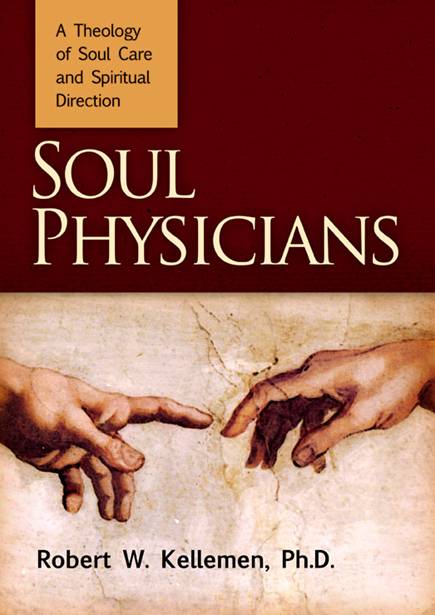
Soul Physicians: The Remedy for Secular Psychology

It was in my first pastoral ministry that I began equipping lay people and pastors to become soul physicians. I longed for them to understand people, diagnose problems, and prescribe solutions—biblically. I long for you to do the same.

Twenty-five years later, I authored Soul Physicians: A Theology of Soul Care and Spiritual Direction. It’s the remedy for secular psychology.

It’s also the remedy for “take two verses and call me in the morning.” It remedies “secular help” and “shallow help.”

Soul Physicians helps you to help your friends. It empowers you to change lives with Christ’s changeless truth.

Unique Focus: Life’s Seven Ultimate Questions

Soul Physicians explores from the Scriptures seven truths that shape the way we see life and ministry. These truths about life’s seven ultimate questions teach us what makes biblical counseling truly biblical.

• Question 1: “What is truth? Where do I find answers?” Answer 1—The Word: “God’s Word is sufficient, authoritative, profound, and relevant.”

• Question 2: “Who is God?” Answer 2—Community/The Creator: “God is Trinitarian.”

• Question 3: “Who am I”? Answer 3—Creation: “We are created with dignity by God in the image of Christ.”

• Question 4: “What went wrong?” Answer 4—Fall: “We sinfully and foolishly choose god-substitutes over God.”

• Question 5: “Can we change? How do people change?” Answer 5—Redemption: “We must apply our complete salvation to our daily sanctification.”

• Question 6—“Where am I headed? What is my destiny?” Answer 6—Consummation/Glorification: “Heaven is my final home.”

• Question 7—“Can I help? How can I help?” Answer 7—Sanctification/Ministry: “We dispense God’s cure for the soul—grace.”

Unique Features

Soul Physicians includes a built-in personal application discussion guide to help develop the Christlike character of the biblical counselor.

Soul Physicians includes a built-in ministry implication discussion guide to help develop the relational competence of the biblical counselor.

Soul Physicians is written in the language of “theo-drama”—relating theology practically and powerfully to our calling to love God and to love one another.

Soul Physicians is comprehensive and compassionate—blending robust biblical truth with caring one another application.

Soul Physicians is perfect for individual and group work. Join the growing number of lay people, pastors, professional Christian counselors, and students who are using Soul Physicians as their twenty-first century manual for understanding people and ministering to them God’s way.

Learn More

To read what others are saying, to download a free sample chapter, and to order Soul Physicians at 40% off, visit my
RPM Ministries (http://www.rpmministries.org/) Soul Physicians page: http://www.rpmministries.org/writing/soul-physicians/

Join the Conversation

Where are you turning to be equipped for one another ministry in the local church that trains you to understand people, diagnose problems, and prescribe solutions—biblically?

Wednesday, April 07, 2010

The Remedy for “Take Two Verses and Call Me in the Morning”


Remember to visit and bookmark my fresh new site: www.rpmministries.org

I've added scores of new free resources, book reviews, videos, and more--all because I know you want to change lives.

The Remedy for “Take Two Verses and Call Me in the Morning”

Your friend tells you, “My spouse just left me.” What do you say? How do you help?

A parishioner shares, “Pastor, I can’t deal with my bitterness and anger.” How do you respond?

What Do I Do After the Hug?

Whether you’re a lay person or a pastor, what do you do after the hug? How are you being trained for biblical one another ministry in the local church? Unfortunately, even the Christian world seems to recommend two extremes.

Extreme # 1: Secular Help.—“The World’s Way”

Someone comes to us with a life struggle, and in our panic we race to the self-help shelf at the local bookstore. Or we type the topic in an Amazon.com search and we find a boatload of the world’s answers.

There has to be a better way.

Extreme # 2: Shallow Help—“Take Two Verses and Call Me in the Morning”

Or, in our attempts to be biblical, we become shallow. We quote a verse and rub it on like a band-aid. We wave a passage of Scripture like a magic wand.

There has to be a better way.

How to Care Like Christ: Helping You to Help Your Friend

Of course there’s a better way. It’s caring like Christ. It’s speaking and living the truth in love. It’s Christ-centered, comprehensive, compassionate, and culturally-informed biblical counseling and spiritual formation.

It’s caring like the Apostle Paul who said, “We loved you so much that we gave you not only the Scriptures, but our own souls, because you were dear to us’ (1 Thessalonians 2:8).

Spiritual Friends: The Remedy for “Take Two Verses and Call Me in the Morning”

It was in my first pastoral ministry that I began equipping lay people and pastors in spiritual friendship. I longed for them to combine truth and love, Scripture and soul, so they could help others with suffering and sin. I long for you to do the same.

Twenty-five years later, I authored Spiritual Friends: A Methodology of Soul Care and Spiritual Direction. It’s the remedy for “take two verses and call me in the morning.” It’s the remedy to shallow help and to secular help.

Spiritual Friends helps you to help your friends. It equips you to change lives with Christ’s changeless truth.

Unique Focus

Spiritual Friends trains you, step-by-step, in a relational model for dealing with suffering and with sin.
Spiritual Friends equips you to develop five “GRACE” biblical counseling skills to offer sustaining help for suffering. “It’s Normal to Hurt.”
Spiritual Friends equips you to develop five “RESTS” biblical counseling skills to offer healing hope for suffering. “It’s Possible to Hope”
Spiritual Friends equips you to develop six “PEACEE” biblical counseling skills to offer reconciling care-fronting for sin and growth in grace. “It’s Horrible to Sin, but Wonderful to Be Forgiven.”
Spiritual Friends equips you to develop six “FAITHH” biblical counseling skills to offer guiding wisdom for sin and growth in grace. “It’s Supernatural to Mature.”

Unique Features

Spiritual Friends includes a built-in application guide to help you to grow in Christ-like character.
Spiritual Friends is a biblically-relevant training manual with thousands of sample “spiritual conversations” that model how to speak the truth in love.
Spiritual Friends is a relational practical workbook with hundreds of skill-building exercises to train you in the art of spiritual friendship/biblical counseling.
• With scores of role-plays, vignettes, life applications, and ministry implications—Spiritual Friends is perfect for individual and group work. A growing number of church small groups, church lay counseling training ministries, pastors, professional Christian counselors, and students are using Spiritual Friends as their twenty-first century manual for people helping.

Learn More

To read what others are saying, to download a free sample chapter, and to order Spiritual Friends at 40% off, please visit my RPM Ministries (http://www.rpmministries.org/) Spiritual Friends page (http://www.rpmministries.org/writing/spiritual-friends/).

Join the Conversation

How are you being equipped for biblical one another ministry in the local church?

Wednesday, December 30, 2009

Top Ten Trends in Biblical Counseling

We' Moved!

Please remember to bookmark and visit my new blog and website: http://www.rpmministries.org/

I've posted twice as many free resources, scores of book reviews, daily blogs, and more--all because I know "You Want to Change Lives!"

So please drop by my fresh new site at: http://www.rpmministries.org/

Top Ten Trends in Biblical Counseling from 2000-2009
Part 2: Trends 5-1

Note: For Part 1 and trends 10-6, please visit here: http://bit.ly/6j737D

It’s hard to believe that the first decade of the 21st century has come and gone.

As the decade ends, I’ve been pondering the top ten positive trends over the past ten years in biblical counseling.

It’s exciting to reflect on what God is doing as He empowers His Church.

Enjoy trends five-to-one (in reverse order to heighten the anticipation!). And please join the conversation and let me know what your selections would be.

5. Culturally-Informed Approaches

There was a time when “modern biblical counseling” consisted of “a bunch of white guys.” Thankfully, the “movement” is maturing due to the contributions of a growing multiethnic group of women and men. Elyse Fitzpatrick (http://bit.ly/8mPcF4), Lucy Ann Moll (http://bit.ly/6xmgky), and Susan Ellis (http://bit.ly/6DLYsM) are just three examples of women leading the way in biblical counseling. Pastor Deepak Reju of Nine Marks Ministries (http://bit.ly/4zhpKO), Dr. Elias Moitinho (http://bit.ly/4udXZb), Pastor Dwayne Bond (http://dwaynerbond.com/blog/), and the Black African American Association of Christian Counselors (BAACC) (http://baacc.aacc.net/index.php) are representatives of a multiethnic group of individuals and associations promoting biblical counseling.

My own books, Beyond the Suffering: Embracing the Legacy of African American Soul Care and Spiritual Direction (http://bit.ly/1IRXq6), and Sacred Friendships: Celebrating the Legacy of Women Heroes of the Faith (http://bit.ly/1GalpI) each seek to teach biblical counseling from a multicultural perspective. There’s also an encouraging movement of international biblical counseling with Wayne Vanderweir’s Overseas Instruction in Counseling (http://bit.ly/5ondyc) being just one such examples.

4. Comprehensive Models

Once upon a time, biblical counseling could be labeled one-dimensional with a focus on combating the impact of the fall/sin on human nature. Today, biblical counseling comprehensively examines creation (understanding people from God’s original design), fall (diagnosing problems resulting from sin), and redemption (prescribing God’s solutions through our salvation and sanctification in Christ). Models also formerly tended to highlight the behavioral aspects of growth in grace. Today they emphasize our relational (spiritual, social, and self-aware), rational (images and beliefs), volitional (motivational and behavioral), emotional, and physical nature in a comprehensive manner. Eric Johnson’s Foundations for Soul Care (http://bit.ly/7XuW2c), and my work Soul Physicians (http://bit.ly/2Ha4Am) are just two examples of books written in the past ten years to offer comprehensive theological foundations for biblical counseling.

3. Progressive Sanctification Focus

Current models of biblical counseling have made great progress in teaching that the counseling process is simply a sub-set of the discipleship process, both of which God designs to assist us to grow in grace. The National Association of Nouthetic Counselors (NANC) (http://bit.ly/8VAblM) has spent the past decade equipping pastors and lay people to assist God’s people in the progressive sanctification process. The mission of the BCSFN is to link biblical counseling and spiritual formation to develop theological models and methodological approaches leading to progressive sanctification.

2. Sufficiency of Scripture Emphasis

Rather than harp on what’s wrong with other models, over the past ten years there has been an increasing focus on the sufficiency, relevancy, profundity, and authority of God’s Word for Christian living. David Powlison’s Seeing with New Eyes (http://bit.ly/5oOj9V) and Speaking Truth in Love, Michael Emlet’s Cross Talk (http://bit.ly/5w4Xbn), and my Spiritual Friends (http://bit.ly/4y05Ux) all practice the sufficiency of Scripture by teaching why and how to saturate biblical counseling with scriptural explorations and spiritual conversations

1. Christ-Centered Purpose

Biblical counseling over the past ten years has re-committed itself to the primary purpose of glorifying Christ. It’s all about Him. For instance, the use of Scripture to assist one another to grow in grace (progressive sanctification) has as its final goal helping one another to exalt and enjoy Christ now and forever. Elyse Fitzpatrick’s Counsel from the Cross (http://bit.ly/7nKsEj) exemplifies Gospel-centered biblical counseling.

We can bring together these top ten trends of the past ten years to offer one working definition of biblical counseling.

Christ-centered, comprehensive, compassionate, and culturally-informed biblical counseling depends upon the Holy Spirit to relate God’s inspired truth about people, problems, and solutions to human suffering (through the Christian soul care arts of sustaining and healing) and sin (through the Christian spiritual direction arts of reconciling and guiding) to empower people to exalt and enjoy God and to love others (Matthew 22:35-40) by cultivating conformity to Christ and communion with Christ and the Body of Christ.

Join the Conversation

What top trends would you add to this list?

What individuals, groups, and books would you add to trends 5-1?

In 75 words or less, how would you define biblical counseling?

Saturday, November 14, 2009

Book Review: Counsel from the Cross


Counsel from the Cross:
Connecting Broken People to the Love of Christ


Book Review Details

*Authors: Elyse M. Fitzpatrick and Dennis E. Johnson
*Publisher: Crossway Books (2009)
*Category: Biblical Counseling, Ministry, Church, Christian Living

Reviewed By: Bob Kellemen, Ph.D., LCPC, Author of Soul Physicians, Spiritual Friends, Beyond the Suffering, Sacred Friendships, and God’s Healing for Life’s Losses. Find all of Bob’s book reviews, blogs, and free resources at www.rpmministries.org.

Recommended: Counsel from the Cross is the next generation text for Christian counselors and the next generation manual for Christian living for believers. This book excels at explaining the connection between the Christian gospel and Christian counseling.


Review: Changing Lives with Christ’s Changeless Truth

Authors Elyse Fitzpatrick and Dennis Johnson state in their preface that they want to lay before their readers the provocative claim that “the cross of Christ and the gospel that proclaim it really are ‘the power of God for salvation [comprehensive rescue] to everyone who believes’ (Rom. 1:16.” Their book Counsel from the Cross engagingly demonstrates that in the cross lies the power to liberate hearts and to instill hope. Thankfully, they have the audacity to believe that change can actually happen—because of what Christ has already done.

Infinitely Loved by an Infinitely Loving God

Paul Tripp gets it right in his back-cover recommendation when he says the book is “a triumph of a maturing biblical counseling movement.” At times, the modern biblical counseling movement has been good at communicating, “It’s horrible to sin,” but not always as good at communicating, “It’s wonderful to be forgiven.” Fitzpatrick and Johnson understand the truth of Romans 5:20 that where sin abounds, grace super-abounds. They understand our guilt before a holy God and our salvation from a loving God. As they beautifully state it, “The cross declares that we are loved with an intensity that defies our capacity to comprehend, not because we are intrinsically lovable but because God is intrinsically love.”

The authors rightfully claim and artfully present throughout their book that “in the cross of Christ and in the surprising combination of ego-smashing humility and despair-smashing confidence . . . lies the power to set struggling people free.” In this, they follow the ancient Puritan arts of loading the conscience with guilt and of lightening the conscience with grace. They follow the principle of historic reconciliation that combines the truths that “it’s horrible to sin, and wonderful to be forgiven.”

The Cure-All that Cures All

Here’s the profound truth communicated in Counsel from the Cross. “We believe that when God the Creator provides a cure-all, it really cures all.” Fitzpatrick and Johnson are convinced that “this reality is profoundly relevant to the way Christian counselors address the struggles of those who come to them for help.”

Upon this foundation, the authors send the following invitation to their readers. “So we invite you to join us in a venture of exploration to discover the power to defeat sin and sadness, conflict and bitterness, and self-pity and self-contempt, not by walking beyond the gospel that first brought us into the favor and family of God but rather by moving more deeply into that same gospel.”

Martin Luther based his ministry of spiritual consolation and spiritual direction upon the truth that “sanctification is the art of getting used to our justification.” Fitzpatrick and Johnson similarly believe that the truth of our acceptance before God by Christ’s righteousness alone must be made practical as we live our everyday lives. They say it so memorably. “We become people who ask WWJD (What would Jesus do?) without ever considering the gospel or WDJD (What did Jesus do?). They add: “We naively press the gospel out to the margins of our faith because we have never really been taught how it’s meant to connect with our daily lives.”

Salvation Grace and Sanctification Grace

Beginning in chapter one with the truth that we are loved by God in Christ, they begin to demonstrate how the applied knowledge of our grace acceptance changes everything about how we view God, ourselves, and others. Continuing in the second chapter, they help us to understand that Christ’s salvation grace is also sanctification grace. The same grace that saved and cleansed us from sin equally empowers us day-by-day to be victorious over sin and in suffering.

Chapter three explains why it is so important to remember and apply God’s immeasurable love: because we have a love problem. No, it’s not that we don’t love ourselves enough. It’s because we love God too little and false gods too much. “Every false god we serve . . . has the power to entice and entrap us only because our love for the Lord is weak.” So we must remember God’s love for us in Christ for one reason: our love for God and for others is responsive in nature. We love God in response to His love for us (1 John 4:19-20). We will never be able to mortify our sins, Fitzpatrick and Johnson correctly explain, “if we are unsure or doubtful about God’s disposition toward us, if we think that he is unloving, displeased, or angry.”

Chapter four explains how believing God’s grace love for us impels us to love Him and others. They call the person who “gets this” the “gospel-centered Christian.” The rest of the book then builds upon these first four chapters as it elaborates upon such relevant themes as gospel-centered counseling, the gospel and our sanctification, the gospel and our emotions, the gospel and our relationships, and the gospel story and the glory story (chapters four-to-nine, respectively).

Applying Timeless Truths in Timely Ways

The authors begin with their definition of counseling. “Gospel-centered counseling is the process of one Christian coming alongside another with words of truth to encourage, admonish, comfort, and help—words drawn from Scriptures, grounded in the gracious saving work of Jesus Christ, and presented in the context of relationship.” They are to be commended for such a Christ-centered, comprehensive, and compassionate description of biblical counseling.

They aren’t finished. “The goal of this counseling is that the brother or sister in need of counsel would grow in his or her understanding of the gospel and how it applies to every area of life and then respond in grateful obedience in every circumstance, all to the building up of the church and for the glory of God.” Counseling is not ultimately about the counselee. Counseling is ultimately about the Divine Counselor. And counseling, though perceived to be so individualistic, in the eyes and hands of Fitzpatrick and Johnson, is corporate and communal.

In this chapter (chapter five), the authors build an absolutely necessary foundation. We can change because we have already been changed. We can put off the old, because in Christ we are new creations. They believe that some modern approaches to biblical counseling have focused on biblical imperatives absence an equal focus on our new identity in Christ (what I would call our “new nature”) and our new relationship to Christ (what I would call our “new nurture”). Gospel-centered counseling applies our justification, regeneration, reconciliation, and redemption to our lives so that the motivation for change and the hope for change both derive from what Christ has already done and not from human self-effort. Chapter six then uses several real-life vignettes to contrast and compare how gospel-centered counseling, versus other approaches to counseling, would address the issue of sanctification—daily growth in grace into the image of Christ.


How does this “play itself out” practically? Fitzpatrick and Johnson answer that question by addressing the gospel and our emotions (chapter seven). They begin by describing the complex interworking of our body and soul. They comprehensively detail the soul as including our capacities to think and reason, emote, and choose. They then carefully explain the interaction of our brain/mind and body/soul relative to emotions. The authors use several narratives and illustrations relative to various emotions to explain their theory of applying the gospel to troubling feelings and mood states. Chapter eight follows a similar pattern as it applies the gospel to our relationships. Here they highlight the importance of our religious affections (love for God) as the basis for holy and healthy human relationships.

In their final chapter (chapter nine), the authors discuss two hugely different ideas of the “glory story.” The secular glory story teaches that we can attain glory by hard work, self-discipline, and the right list of activities. The scriptural glory story teaches us that our current maturity (sanctification) and our future glory (glorification) are grace-based. Our future promised victory over sin motivates us today to cling to Christ’s grace for progressive sanctification as we battle idols of the heart and besetting sins.

Pursuing Counsel from the Cross

In the spirit of the book’s entire message of applying truth to life, Fitzpatrick and Johnson include in each chapter personal illustrations, counseling vignettes, and real-life narratives. They also conclude each chapter with a built-in discussion/application guide aptly labeled Pursuing Counsel from the Cross. Their questions are carefully crafted to engage readers in personalizing the truths in each chapter by applying them to their lives and ministries.

Counsel from the Cross is a refreshing, nourishing, and nurturing examination of what makes biblical counseling truly biblical and what makes Christian living truly Christian. Pastors, counselors, educators, and students would all do well to build their ministries upon this model. As believers, we would all do well to build our lives upon the life, death, burial, and resurrection of Christ—as explained in Counsel from the Cross.


Thursday, November 05, 2009

What's Our Goal?

The Anatomy of Anxiety, Part 11:
What’s Our Goal?

Note: For previous posts in this blog mini-series, please visit: Part 1: http://bit.ly/aHstk, Part 2: http://bit.ly/20R01P, Part 3: http://bit.ly/HAoxI, Part 4: http://bit.ly/1I6XmF, Part 5: http://bit.ly/19Jdqt, Part 6: http://bit.ly/19vCXx, Part 7: http://bit.ly/21wPLg, Part 8: http://bit.ly/m50On, Part 9: http://bit.ly/4vhNIt, part 10: http://bit.ly/1ClPr4.

Does worry, doubt, or fear get the best of you sometimes? Do you wonder where anxiety comes from and how to defeat it in your life and the lives of those you love? Then we need a biblical anatomy of anxiety. And, we need God’s prescription for victory over anxiety.

What’s Our Goal?

If you or someone you care about is struggling with anxiety, what’s our goal?

You shout, “To get rid of the anxiety!”

Well, that’s a great desire. It certainly is an acceptable prayer. “Lord, if it be Thy will, remove all feelings and experiences of anxiety.”

The problem is, this side of heaven, not all feelings are “healed,” not all negative emotional experiences are “wiped away.” It’s on the other side of heaven that we have no more tears, sorrow, pain, or suffering.

There’s no guarantee that medication will eliminate anxiety. There’s no promise that talk therapy will remove all feelings of fear. There’s no pledge that biblical counseling or scriptural meditation will eliminate every negative emotion.

When anxiety is totally eliminated, that’s a special grace of God for which everyone gives thanks. But that’s not the everyday result nor should it be our ultimate goal.

Peace in the Midst and Godly Living All the Time

Our goal is peace that passes understanding. Peace that empowers us to live and love like Christ even if we still feel anxious.

Even if we still have fear, our goal is to face our fears in and through Christ for God’s glory and the good of others.

We can and often should change how we respond to our emotions, what we do with our emotions, and how we manage our moods.

We can change the choices we make as a result of the feelings we have. We can address the motivations of our hearts.

We can renew our minds and change our thinking about our feelings, about God, about ourselves, and about others.

We can return to a focus on loving God and others, regardless of our feelings.

All of those are good, godly goals—much better goals than changing or eliminating feelings of anxiety.

Nothing is more courageous than doing the right thing even when we’re terrified.

Nothing is more godly than facing our fears even when our fears are not eliminated.

Wednesday, October 28, 2009

Christian Counseling Training in NW Indiana

Christian Counseling Training: How to Care Like Christ

Do you care deeply for people, but sometimes pray that you had further equipping in how to care like Christ?

I'll be presenting a 3-hour interactive Christian Counseling In-service at Family Concerns Counseling in Valpo (NW Indiana, about an hour SE of Chicago).

It will be on Friday, November 6 from 9-noon. There is no charge, but Family Concerns is footing the bill so donations to offset their costs will be accepted.

The seminar is especially geared toward Christians who counsel professionally and pastorally.

We'll learn how to address life's seven ultimate questions.

And we'll learn how to understand people, diagnose problems, and prescribe solutions--biblically.

Space is very limited, so if you are interested in attending, here's contact information:

Dave Bauer
Family Concern Counseling
2004 Valparaiso St in Valparaiso, Indiana

On November 6th from 9:00 AM to Noon

To Register Contact: 219-477-5646 and famcounseling@yahoo.com

For direction or more details about Family Concern Counseling go to
www.familycounsel.org


Sunday, August 30, 2009

The Best of Books on Theology and Counseling

Kellemen’s Christian The Best Of Guide
The Best of Books on
The Theology of Biblical Counseling and Spiritual Formation

Kellemen’s Christian The Best of Guide: Making your life easier by finding, summarizing, evaluating, and posting the best resources on a wide variety of topics from a Christian perspective.

The Twenty Most Influential Books on
The Theology of Biblical Counseling and Spiritual Formation

Note: The following books focus on a theology/theory of biblical counseling and spiritual formation. They do not highlight methodology/practice. They focus on a broad theory of people, problems, and solutions, they do not highlight specific “issues” in counseling (such as depression, anxiety, etc.).

Note: For the sake of space, I have not reviewed each of these books. However, I do have a 55-page document that reviews over 125 books on Biblical Counseling and Spiritual Formation:
http://bit.ly/sYx1U. That fuller document explains that I do not endorse everything in all the books below. The books below are the ones that you want to be aware because they have shaped the various perspectives on modern biblical/Christian counseling and spiritual formation.

Bibliography

Adams, Jay E. A Theology of Christian Counseling: More Than Redemption. Grand Rapids: Zondervan, 1986.

Anderson, Neil T., Terry Zuehlke, and Julianne S. Zuehlke. Christ-Centered Therapy: The Practical Integration of Psychology and Theology. Grand Rapids: Zondervan, 2000.

Bredfeldt, Gary J. and Harry Shields. Caring for Souls: Counseling Under the Authority of Scripture. Chicago: Moody, 2001.

Clinton, Tim and George Ohlschlager, eds. Competent Christian Counseling, Volume One: Foundations and Practice of Compassionate Soul Care. Colorado Springs: Waterbrook, 2002.

Collins, Gary. Christian Counseling: A Comprehensive Guide. Revised edition. Nashville: Nelson, 1988.

Crabb, Larry. Understanding People. Grand Rapids: Zondervan, 1987.

Eyrich, Howard A. and William L. Hines. Curing the Heart: A Model for Biblical Counseling. Ross-shire, UK: Christian Focus Publications, 2002.

Fitzpatrick, Elyse. Idols of the Heart: Learning to Long for God Alone. Phillipsburg, NJ: P & R Publishing, 2001.

Johnson, Eric. Foundations for Soul Care: A Christian Psychology Proposal. Downers Grove, IL: IVP Academic, 2007.

Jones, Ian. The Counsel of Heaven on Earth: Foundations for Biblical Christian Counseling. Nashville: B&H, 2006.

Jones, Stanton and Eric Johnson, eds. Psychology and Christianity. Downers Grove, IL: InterVarsity, 2000.

Kellemen, Robert W. Soul Physicians: A Theology of Soul Care and Spiritual Direction. Revised Edition. Winona Lake, IN: BMH Books, 2007.

Lake, Frank. Clinical Theology. Lexington, KY: Emeth Press, 2006.
Lane, Tim, and Paul Tripp. How People Change. Second Edition. Greensboro, NC: New Growth Press, 2008.

MacArthur, John F., Jr. and Wayne A. Mack. Introduction to Biblical Counseling. Nashville: W Publishing Group, 1994.

McMinn, Mark. Psychology, Theology, and Spirituality in Christian Counseling. Carol Stream, IL: Tyndale, 1996.
Peterson, Eugene. Christ Plays in Ten Thousand Places: A Conversation in Spiritual Theology. Grand Rapids: Eerdmans, 2005.
Powlison, David. Seeing with New Eyes: Counseling and the Human Condition through the Lens of Scripture. Phillipsburg, NJ: P & R, 2003.

Pugh, John. Christian Formational Counseling: The Work of the Spirit in the Human Race. Mustang, OK: Tate Publishing, 2008.

Tripp, Paul David. Instruments in the Redeemer’s Hands: People in Need of Change Helping People in Need of Change. Phillipsburg, NJ: P & R, 2002.


Important Stuff

*Your Guide: Bob Kellemen, Ph.D., LCPC, is the Founder and CEO of RPM Ministries (www.rpmministries.org) through which he writes, speaks, and consults to equip God’s people to change lives with Christ’s changeless truth. He blogs daily at http://rpmministries.blogspot.com.

*My Necessary Disclaimer: Of course, I don’t endorse everything in every article, book, or link that you’ll find in Kellemen’s Christian The Best of Guide. I report, you decide.

*Your Suggestions Are Welcomed: Feel free to post comments and/or send emails (rpm.ministries@gmail.com) about resources that you think deserve attention in various categories covered in Kellemen’s Christian The Best of Guide.

Thursday, July 30, 2009

Book Review: Seeing with New Eyes


Seeing with New Eyes:
Counseling and the Human Condition through the Lens of Scripture

*Title: Seeing with New Eyes
*Author: David Powlison, Ph.D.
*Publisher: P&R Publishing (2003)
*Category: Church, Biblical Counseling, Ministry

Reviewed By: Bob Kellemen, Ph.D., LCPC, Author of Soul Physicians, Spiritual Friends, Beyond the Suffering, Sacred Friendships, and God’s Healing for Life’s Losses

Recommended: Seeing with New Eyes offers a Christ-centered, comprehensive model for building a biblical theology of biblical counseling based upon a biblical psychology of human nature.

Review: The Creator’s View of His Creation

Author David Powlison is one of the foremost theologian-practitioners in the modern biblical counseling movement. Seeing with New Eyes compiles articles previously penned (over a period of two decades) by Powlison, all centered around the theme of a theology of biblical counseling.

Thinking God’s Thoughts After Him

Powlison defines counseling very practically as “intentionally helpful conversations.” His goal in Seeing with New Eyes is to equip readers to look at such spiritual conversations through God’s perspective—this encompasses the “new eyes” of the title. We see everything in life and ministry entirely differently when God’s eyes become our lens.

Powlison uses the common and very helpful model of creation, fall, and redemption to unfold Scriptures’ view of people, problems, and solutions. It is through this three-fold conceptual grid that Seeing with New Eyes seeks to assist the church in the care and cure of souls.

The premise is simply profound: Does God have a take on counseling? Powlison answers in the affirmative: God’s gaze has everything to say about the myriad issues counseling addresses. Seeing with New Eyes aspires to listen well, to look closely, and to think hard within the patterns of God’s gaze.

Opening Blind Eyes

Powlison organizes his thoughts in two parts: Scripture Opens Blind Eyes and Reinterpreting Life. In part one, readers enjoy a biblical theology of biblical counseling from three books of Scripture: Ephesians, Psalms, and Luke. In part two, readers benefit from a biblical psychology of biblical counseling: what is the nature of human nature and why do we do what we do?

In several chapters on Ephesians, Powlison seeks to understand how Paul uses Scripture and thus how we should do so in practical theology. He then explores Paul’s view of God and the titanic difference our image of God must make in our lives and ministries. In a final chapter on Ephesians, Powlison uses Ephesians 5:21-6:4 as a model for understanding human relationships. Throughout this section Powlison artfully crafts a pastoral theology for real people with real life issues and a real God with real answers.

Biblical counseling has sometimes been slow to emphasize suffering, instead focusing almost exclusively on sin. So it is encouraging to see Powlison spend two important chapters on the why and how of suffering, using the Psalms as his guide. These chapters provide a biblical sufferology useful both for the person going through suffering and for the person called along side to help the sufferer.

His chapter on Luke is a sermon on Jesus’ sermon on worry. What Powlison does here is reflective of his entire purpose: he takes one section of Scripture and not only applies it, but models how we can apply it in biblical counseling.

For readers wanting a full-blown, systematic, detailed theology of biblical counseling, Seeing with New Eyes may fall a little short. However, that was not Powlison’s purpose. However, for readers wanting an excellent introduction into how to view and use Scripture to begin to develop a biblical model of biblical counseling, Seeing with New Eyes is an excellent primer.

What Is the Nature of Human Nature?: Why Do We Do What We Do?

Having shared a foundational model of biblical counseling theology-building, Powlison now illustrates how to build a biblical psychology—a biblical view of “personality theory.” Put practically, he asks and answers the question, from the perspective of the Creator, “What makes us tick?”

The strength of this section is found in Powlison’s insistence on building a view of human nature not coram anthropos (from the perspective of humanity), but coram Theos (from the perspective of God). We can understand people via people, or we can understand people via God. Powlison rightly chooses to understand the creature not through the creature but through the Creator.

These nine chapters cover, in overview form, almost every issue a biblical counselor needs to ponder when developing a Christian approach to human nature. In each case, Powlison shows insight into the world’s perspective, shares his view of God’s perspective, and does both with a keen eye to practical application and ministry implications.

Chapter 7 goes for the big picture of human motivation theory. It explores God’s “X-ray” of what He sees when He looks at why we do what we do. The 35 X-ray questions are worth the proverbial price of the book—practical, theological, psychological, motivational, convicting.

Chapters 8 and 9 present a theology of desire and affections. Again, biblical counseling at times has been seen (and perhaps has been somewhat guilty of) to deemphasize desires, affections, and longings. These two chapters go a long way toward reemphasizing the biblical importance of and place of desire, rightly understood, in the Christian’s life. Powlison accurately demonstrates that desire and affection are good terms and core aspect of God’s design, but that because of the fall we must always battle the temptation to orient our desires away from God.

No pie-in-the-sky theology, Powlison shows the practicality of a theology of desire/affection in chapter 10 when he addresses the question, What if your father didn’t love you? How does a Christian counselor deal with the legitimate but unmet desire (see James 4:1-4) of “father love”?

Similarly, Powlison’s chapter What Do You Feel? explores another area that at times has seen limited press in modern biblical counseling. How do we understand emotions biblically and how do we mature as emotional beings? Powlison strikes a good balance between living for feelings and ignoring feelings.
In his final chapter, Powlison attempts to address the complex issues surrounding bio-psychology: what is the role and relationship of the body to the mind? Powlison, in the space allowed, provides a nuanced approach. For instance, Powlison summarizes supportively the historic rule of thumb in biblical counseling, “See a doctor for your body. See your pastor, other pastoral counselors, and wise friends for your heart, soul, mind, might, manner of life, and the way to handle sufferings.” But perhaps because the mind/body issue is so complex in its God-designed interworking, this chapter at times felt a little less “deep” and a little too “definitive.” The possible interrelationship of mind/body, brain/soul at times seems a bit minimized. That said, Powlison does acknowledge the potential ambiguity and does encourage the biblical counselor to keep abreast of accurate medical research.

Living Life Well

Seeing with New Eyes is about living life well for God’s glory. It is a surprisingly cohesive book given that it pulls together over a dozen articles written over nearly two decades. It provides a consistent sampler of how to erect a biblical, God-honoring, God-following approach to people-helping. It supplies a compass, a GPS, a directional marker, a map to guide, without being a straight-jacket to follow blindly. The gaze of Christ does in fact shape the spiritual conversations between real people in the real world.

Tuesday, July 28, 2009

The Best of Christian Biblical Counseling

Kellemen’s Christian The Best Of Guide
The Best of Christian Biblical Counseling Associations


Kellemen’s Christian The Best of Guide: Making your life easier by finding, summarizing, evaluating, and posting the best resources on a wide variety of topics from a Christian perspective.

The Best of Christian Biblical Counseling Associations

*American Association of Christian Counseling: http://www.aacc.net/

The AACC is the largest counseling association of any type, any where in the world with nearly 50,000 members. Their web site offers links to resources, conferences, articles, links to counselors and counseling agencies, and much more.

*The Biblical Counseling and Spiritual Formation Network:
http://bcsfn.aacc.net/

The BCSFN is a division of the AACC (I am a co-director). The web site provides resources for pastors, lay people, and Christian/biblical counselors including a daily blog, free resources, conferences, book reviews, and much more. The BCSFN seeks to build bridges of connection through positive presentations of biblical counseling that leads to formation into the image of Christ.

*Black African American Christian Counselors:
http://www.aacc.net/divisions/baacc/

The BAACC is a division of the AACC. It seeks to equip counselors to understand intercultural issues that impact ministry and to suggest ways to enrich services for our ethnically diverse society from a Christian perspective.

*The Society for Christian Psychology:
http://christianpsych.org/

The SCP is a division of the AACC. It seeks to equip believers to understand psychology from a thoroughly Christian perspective. Their web site offers resources, a weekly blog, articles, conferences, and more.

*Faith Biblical Counseling Ministries:
http://www.faithlafayette.org/ministry4.aspx

FBCM is a ministry of Faith Baptist Church in Lafayette, Indiana. For over three decades, Faith has been leading the way in equipping lay people and pastors to be biblical counselors. Their web site offers information on numerous conferences around the country, plus resources for biblical counseling.

*The Christian Counseling and Education Foundation: http://www.ccef.org/

The CCEF seeks to restore Christ to counseling and to restore counseling to the church. Their web site includes numerous books and conferences, along with frequently updated articles on life issues.

*The Association of Biblical Counselors: http://www.christiancounseling.com/

The ABC is the “new kid on the block,” having been launched five years ago to provide equipping in biblical counseling. Their web site offers resources, articles, links to certified counselors, links to blogs, and much more. Their national and regional conferences equip lay people and pastors to speak the truth in love.

*National Association of Nouthetic Counseling: http://www.nanc.org/

The NANC provides training and certification for nouthetic (from a Greek word used in the New Testament meaning to confront out of concern for change) biblical counselors. They host conferences around the country to equip pastors and lay people. Their web site lists certified counselors and provides resources and links for biblical counseling.

*RPM Ministries: www.rpmministries.org

RPM Ministries is my ministry. I seek to equip God’s people to change lives with Christ changeless truth through Christ-centered, comprehensive, compassionate, and culturally-informed biblical counseling and spiritual formation. The web site includes links, free resources, articles, book reviews, a blog, quotes of notes, and much more.

Important Stuff

*Your Guide: Bob Kellemen, Ph.D., LCPC, is the Founder and CEO of RPM Ministries (www.rpmministries.org) through which he writes, speaks, and consults to equip God’s people to change lives with Christ’s changeless truth. He blogs daily at http://rpmministries.blogspot.com.

*My Necessary Disclaimer: Of course, I don’t endorse everything in every article, book, or link that you’ll find in Kellemen’s Christian The Best of Guide. I report, you decide.

*Your Suggestions Are Welcomed: Feel free to post comments and/or send emails (rpm.ministries@gmail.com) about resources that you think deserve attention in various categories covered in Kellemen’s Christian The Best of Guide.

Tuesday, June 09, 2009

Why Male Biblical Counselors Need the Perspective of Female Biblical Counselors


Why Some Biblical Counseling Is Only Half Biblical!
Part Seven: Why Male Biblical Counselors
Need the Perspective of Female Biblical Counselors

*Note: If you’re disappointed that I’m saying that some biblical counseling is only half biblical, then please read my comments at the end of my first post in this series: http://tinyurl.com/n8k799.


My Premise

Some modern biblical counseling considers the seriousness of sin—sinning, but spends much less time equipping people to minister to the gravity of grinding affliction—suffering. When we provide counseling for sin, but fail to provide counseling and counselor training for suffering, then such biblical counseling is only half biblical.

How We Lost Our Way

Yesterday’s post (
http://tinyurl.com/m945pr) explained that the failure to integrate the African American comprehensive perspective of suffering and sin is one reason why White Evangelical biblical counselors lost their way.

Today we add another example of intercultural dearth: the failure to focus on the contribution of Christian women soul care-givers and spiritual directors.

This dearth is why RPM Ministries is so passionate about Christ-centered, comprehensive, compassionate, and culturally-informed biblical counseling. When our counseling is predominantly taught by one segment of one cultural group (in this case, White males like myself), we lose the comprehensive perspective.

In the new book released later this summer, Sacred Friendships: Celebrating the Legacy of Women Heroes of the Faith (
http://tinyurl.com/ql8fqc), Susan Ellis and I share life-changing and ministry-altering narratives from 52 Christian women in Church history. Consistently they unite biblical ministry for suffering and sin.

Following Christian Women’s Historical Compass

The biblical counseling approach of women in Church history is holistic, comprehensive. They practice sustaining and healing soul care for suffering and reconciling and guiding spiritual direction for sin. As Susan and I show in our Introduction:

"Susanna Wesley (1669-1742), mother of Wesleyan pioneers John and Charles, exemplifies in one breath these four interrelated callings. “We are to be instructed, because we are ignorant [guiding]; and healed, because we are sick [healing]; and disciplined, because so apt to wander and go astray [reconciling]; and succored and supported, because we are so often tempted [sustaining].”
[i] Susanna Wesley and uncountable Christian women like her followed a spiritual compass. Instead of N-S-E-W, their soul care and spiritual direction compass points read S-H-R-G: Sustaining, Healing, Reconciling, and Guiding. Throughout Sacred Friendships, they will gift us with their wisdom—wisdom for ministry today to God’s glory forever."

Don’t for a moment imagine that Christian women only focused on the “touchy-feely” area of suffering. Read Sacred Friendships and you will see that they out-confront the best male biblical counselor! It’s not that women provide the “softer side” of biblical counseling. It’s that women offer the comprehensive, non-compartmentalized “both sides” of biblical counseling.

Conclusion

Because we White Evangelical male biblical counselors pulled the pendulum back from a focus on self and because we did so with too little awareness of and connection with our sisters in Christ, we compartmentalized sin and suffering and minimized the development of biblical counseling approaches that produced comprehensive sacred friendships.

Where Do We Go From Here?

In our next post, we’ll explore additional reasons why some biblical counseling compartmentalized sin and suffering and focused too little on equipping God’s people to be a hospital for the hurting.


[i]Clark, Memoirs of the Wesley Family, 398.

Monday, June 08, 2009

Why White Biblical Counselors Need the Black Church


Why Some Biblical Counseling Is Only Half Biblical!
Part Six:
Why White Biblical Counselors Need the Black Church

*Note: If you’re disappointed that I’m saying that some biblical counseling is only half biblical, then please read my comments at the end of my first post in this series: http://tinyurl.com/n8k799.

My Premise

Some modern biblical counseling considers the seriousness of sin—sinning, but spends much less time equipping people to minister to the gravity of grinding affliction—suffering. When we provide counseling for sin, but fail to provide counseling and counselor training for suffering, then such biblical counseling is only half biblical.

Why and How We Lost Our Way

So, why do I think biblical counseling lost its way? What historical, cultural, and personal realities help to explain why some modern biblical counseling is only half biblical?

E. Brooks Holifield, in his excellent study, A History of Pastoral Care in America (
http://tinyurl.com/mo6ww8), demonstrates how pastoral ministry moved from a focus on salvation to a focus on self-realization. It moved from Christ to self, from Scripture to humanism.

In my own study of pastoral counseling in America, I’ve found that biblical counseling from the end of the Civil War (1865) to the passage of the Civil Rights Act (1964) moved from a focus on suffering and sin to a focus on self.

Interesting, isn’t it, that for these 100 years, framed by the Civil War and Civil Rights, we lost our way with Christian counseling and pastoral ministry.

In coming posts, I’ll share about the impact of liberalism and fundamentalism on pastoral ministry during this era. I’ll also describe how the modern biblical counseling movement pulled the pendulum back to a focus on sin, but not always to an equal focus on suffering.

Why White Biblical Counseling Needs the Black Church

Here’s my conviction about why pastoral ministry moved from suffering and sin to self, and why modern biblical counseling pulled the focus back to sin but not as much to suffering: church segregation.

From the end of the Civil War to the Civil Rights Act, and continuing to today, Sunday morning remains the most segregated hour in America. We lose so much by this church segregation.

White Evangelical biblical counselors lose the amazing, beautiful, biblical blending of suffering and sin that so characterizes the Black Evangelical Church from its inception in enslavement right up to our day.

In my book, Beyond the Suffering: Embracing the Legacy of African American Soul Care and Spiritual Direction, readers enjoy 100s of lively narratives that consistently depict how the Evangelical Black Church never compartmentalized suffering and sin. Instead, the Black Church consistently integrated, mingled, blended, and kept united soul care for suffering and spiritual direction for sinning.

Samples and the Full Meal

If you want to read a free sample chapter on the Black Church’s personal ministry of the Word, go here:
http://tinyurl.com/nykc3h.

If you want your own copy of the entire book in order to be equipped and empowered by African American biblical counselors, go here:
http://tinyurl.com/cm96x6.

Conclusion

Because we White Evangelical biblical counselors pulled the pendulum back from a focus on self and because we did so in segregation from our Black brothers and sisters, we compartmentalized sin and suffering and ignored the development of biblical counseling approaches that help us to move beyond the suffering.

Where Do We Go From Here?

In my next post, I’ll share what White Evangelical male biblical counselors lost when we minimized the contribution of female soul care-givers and spiritual directors.

Friday, June 05, 2009

Why Some Biblical Counseling Is Only Half Biblical! Part Five


Why Some Biblical Counseling Is Only Half Biblical!
Part Five: What to Do After the Hug

*Note: If you’re disappointed that I’m saying that some biblical counseling is only half biblical, then please read my comments at the end of this post.

My Premise

Some modern biblical counseling considers the seriousness of sin—sinning, but spends much less time equipping people to minister to the gravity of grinding affliction—suffering. When we provide counseling for sin, but fail to provide counseling and counselor training for suffering, then such biblical counseling is only half biblical.

What To Do After the Hug

Some might conclude, “But there’s really no need to teach people how to comfort the suffering because they do that naturally.”

I’m sure Job would disagree with that as it relates to his “miserable counselors” who called his suffering “sin.”

So, today we ask and answer the question: “What might it look like to train pastors and lay people to be soul physicians and spiritual friends who deal with suffering?”

The Bible has a great deal to say not only about suffering, but also about how to comfort the suffering. Church history has highlighted two core biblical counseling competencies for suffering:

*Sustaining

*Healing

In Spiritual Friends (
http://tinyurl.com/nxbxes), pages 39-214 teach lay people, pastors, and students the following ten biblical relational skills for sustaining and healing. Here’s your primer:

*Sustaining: “It’s Normal to Hurt.”

Using the acronym GRACE, we need to learn five biblical relational competencies if we are to be comprehensive, compassionate, and culturally-informed soul care-givers who offer sustaining comfort:

1. G: Grace Connecting
2. R: Rich Soul Empathizing
3. A: Accurate/Active Spiritual Listening
4. C: Caring Spiritual Conversations
5. E: Empathetic Scriptural Explorations

*Healing: “It’s Possible to Hope.”

Using the acronym RESTS, we need to learn five biblical relational competencies if we are to be comprehensive, compassionate, and culturally-informed soul care-givers who offer healing hope:

1. R: Relational Treatment Planning
2. E: Encouraging Communication
3. S: Story Reinterpreting
4. T: Thirsts Spiritual Conversations
5. S: Stretching Scriptural Explorations

How to Train Biblical “Sufferologists”

My point is not to say that I have cornered the market on equipping people how to offer biblical comfort for suffering. My point is that you can read many biblical counseling training manuals, attend many biblical counseling training seminars, and read many biblical counseling definitions, and find very little equipping for “sufferologists”—biblical counselors who offer sustaining empathy and healing encouragement.

Rather than assuming that we do this naturally, let’s do what the Bible and Church history do: let’s focus on biblical counseling and spiritual friendship equipping on how to train believers to deal both with sin and with suffering.

Where Do We Go From Here?

In my next post, I’ll share why I think biblical counseling lost its way. What historical, cultural, and personal realities help to explain why some modern biblical counseling is only half biblical?

*Note: Why I Am Addressing This Topic

All who have followed my ministry know that I am about bridge-building and not about wall-building. You might wonder then, “Bob, why blog about something that is surely to be controversial?”

Those who follow my ministry also know that I am about equipping God’s people to change lives with Christ’s changeless truth through comprehensive, compassionate, and culturally-informed biblical counseling and spiritual formation.

Biblical counseling that fails to deal with suffering, fails the test of comprehensive, compassionate, and culturally-informed biblical counseling. I would be a hypocrite to my calling if I remained silent.

Others might wonder, “Are you talking about a particular ‘model’ of modern biblical counseling, or about a particular person or persons who are writing today?”

No. I am not. This is not an attack against. These blogs are not directed toward any one person or group.

These blogs are directed to all of us—myself included—who love biblical counseling. They are for all of us—myself included—who need good Bereans to help us to assess how biblical or unbiblical our approaches to biblical counseling truly are.

I write to help, not to hurt. I write to equip, not to attack. I write to start a conversation, not to finish one.

Please join the conversation.

Thursday, June 04, 2009

Why Some Biblical Counseling Is Only Half Biblical, Part Four

Why Some Biblical Counseling Is Only Half Biblical!
Part Four: The Great Cloud of Biblical Counseling Witnesses

*Note: If you’re disappointed that I’m saying that some biblical counseling is only half biblical, then please read my comments at the end of this post.

My Premise

Some modern biblical counseling considers the seriousness of sin—sinning, but spends much less time equipping people to minister to the gravity of grinding affliction—suffering. When we provide counseling for sin, but fail to provide counseling and counselor training for suffering, then such biblical counseling is only half biblical.

The Great Cloud of Biblical Counseling Witnesses

The Bible exhorts us to honor and learn from those who have gone before us:

“Remember the days of old; consider the generations long past. Ask your father and he will tell you, your elders, and they will explain to you” (Deuteronomy 32:7).

“Stand at the crossroads and look; ask for the ancient paths, ask where the good way is, and walk in it, and you will find rest for yours souls” (Jeremiah 6:16a).

“Therefore, since we are surrounded by such a great cloud of witnesses, let us throw off everything that hinders and the sin that so easily entangles, and let us run with perseverance the race marked out for us” (Hebrews 12:1).

So, how did the great cloud of biblical counseling witnesses in Church history deal with suffering? Well, for the detailed answer, please refer to:

Soul Physicians (
http://tinyurl.com/d96hc6),

Spiritual Friends (
http://tinyurl.com/qh5tj4),

Beyond the Suffering (
http://tinyurl.com/cm96x6),

Martin Luther’s Pastoral Counseling (
http://tinyurl.com/ovw588),

Sacred Friendships (
http://tinyurl.com/ql8fqc).

The Readers’ Digest Version

As Church historians have probed the history of personal ministry, they have categorized all “people-ministry” using the four tasks of sustaining and healing for suffering, and reconciling and guiding for sinning. Though different terms were used in different eras, these historians have found consistent categories, definitions, and descriptions. Historically, comprehensive biblical care of people always involved the twin functions of soul care for suffering and spiritual direction for sinning through the four ministries of sustaining, healing, reconciling, and guiding.

John McNeil’s A History of the Cure of Souls traces the art of soul care throughout Church history and shows that Christians always provided ministry for suffering and sin.

“Lying deep in the experience and culture of the early Christian communities are the closely related practices of mutual edification and fraternal correction.”

Speaking of the Apostle Paul, McNeil notes:

“In such passages we cannot fail to see the Apostle’s design to create an atmosphere in which the intimate exchange of spiritual help, the mutual guidance of souls, would be a normal feature of Christian behavior.”

Throughout his historical survey, McNeil explains that mutual edification involves soul care through the provision of sustaining (consolation, support, and comfort) and healing (encouragement and enlightenment) for suffering. Fraternal correction includes spiritual direction through the provision of reconciling (discipline, confession, and forgiveness) and guiding (direction and counsel) for sinning.

Historians of soul care, Clebsch and Jaekle, found that pastoral care has historically involved “helping acts, done by representative Christian persons, directed toward the healing, sustaining, guiding, and reconciling of troubled persons whose troubles arise in the context of ultimate meanings and concerns” (Clebsch and Jaekle, Pastoral Care in Historical Perspective, p. 4).

How extensive has the twin ministries of soul care for suffering and spiritual direction for sinning been?

“The Christian ministry of the cure of souls, or pastoral care, has been exercised on innumerable occasions and in every conceivable human circumstance, as it has aimed to relieve a plethora of perplexities besetting persons of every class and condition and mentality. Pastors rude and barely plucked from paganism, pastors sophisticated in the theory and practice of their profession, and pastors at every stage of adeptness between these extremes, have sought and wrought to help troubled people overcome their troubles. To view pastoral care in historical perspective is to survey a vast endeavor, to appreciate a noble profession, and to receive a grand tradition” (Clebsch and Jaekle, p. 1).

Have we in the biblical counseling movement received or ignored this grand tradition of biblical counseling both for suffering and for sin?

Where Do We Go from Here?

Tomorrow, I’ll address the question, “What might it look like to train pastors and lay people to be soul physicians and spiritual friends who deal with both suffering and sin?”

*Note: Why I Am Addressing This Topic

All who have followed my ministry know that I am a bridge-builder and not a wall-builder. You might wonder then, “Bob, why blog about something that is surely to be controversial?”

Those who follow my ministry also know that I equip God’s people to change lives with Christ’s changeless truth through comprehensive, compassionate, and culturally-informed biblical counseling and spiritual formation.

Biblical counseling that fails to deal with suffering, fails the test of comprehensive, compassionate, and culturally-informed biblical counseling. I would be a hypocrite to my calling if I remained silent.

Others might wonder, “Are you talking about a particular ‘model’ of modern biblical counseling, or about a particular person or persons who are writing today?”

No. I am not. This is not an attack against. These blogs are not directed toward any one person or group.

These blogs are directed to all of us—myself included—who love biblical counseling. They are for all of us—myself included—who need good Bereans to help us to assess how biblical or unbiblical our approaches to biblical counseling truly are. I write to help, not to hurt. I write to equip, not to attack. I write to start a conversation, not to finish one.

Please join the conversation.

Wednesday, June 03, 2009

Why Some Biblical Counseling Is Only Half Biblical, Part Three


Why Some Biblical Counseling Is Only Half Biblical!
Part Three:
Embracing the Legacy of Comforting Biblical Counseling

*Note: If you find yourself upset that I am saying that some biblical counseling is only half biblical, then I would ask you to be sure to read my comments at the end of this blog post. Thanks!

My Premise

Some modern biblical counseling considers the seriousness of sin—sinning, but spends much less time equipping people to minister to the gravity of grinding affliction—suffering. When we provide counseling for sin, but fail to provide counseling and counselor training for suffering, then I am of the conviction that such biblical counseling is only half biblical!

The Myth: Dealing with “Suffering” Is Surely “Secular”

Here’s the myth we face when we say that we must deal with suffering as well as with sin:

“Oh, that’s just modern secular psychotherapy.” Or, “That’s obviously influenced by Freudianism.” Or, “No one ever said biblical counseling was about suffering until after the advent of modern humanism.”

Those are each myths.

Our first post in this series highlighted the theological necessity for dealing with suffering—failing to care for the suffering actually minimizes the universal impact of sin.

Our second post pondered just a few of many of the biblical mandates for dealing with suffering—such as Job; John 9:1-3; 2 Corinthians 1:3-11; Romans 12:15; and the occurrence of parakaleo over 100 times in the New Testament.

We could also add the Lament Psalms, the very character of God as the Father of the fatherless, David, Jeremiah, Jesus, Paul. Elsewhere (see Soul Physicians
http://tinyurl.com/npfwsh) I have addressed an entire biblical theology of suffering—sufferology). Elsewhere I have spent over 100 pages outlining the Bible’s approach to helping the hurting (see Spiritual Friends http://tinyurl.com/nxbxes).

The Reality: Dealing with Suffering Is Certainly Biblical

Dealing with suffering is certainly biblical.

Of course, one could say, “That’s just your flawed interpretation of Scripture.”

Could be. While God’s Word is inspired, perfect, and inerrant, none of our interpretations are.

So I’ve also spent over a quarter-century studying Church history: the Church Fathers, the Reformers, the Puritans, African American believers (
http://tinyurl.com/nykc3h), women in Church history (http://tinyurl.com/ql8fqc), etc.

Then again, we could run into yet another false accusation:

“So, you are saying that tradition is on the same par as inspired Scripture!”

No. Not at all.

I am simply saying that since all our interpretations of Scripture are errant, and since some claim that those who deal with suffering are unknowingly influenced by modern secular psychology, that turning to conservative believers pre-Freud could be a good reality check.

Church History Samplers of Comforting Biblical Counseling for Suffering

I wrote my Ph.D. dissertation (
http://tinyurl.com/ovw588) on the great Reformer, Martin Luther. What many do not know is that Luther was also a master pastor. He left us 1000s of letters of spiritual consolation where he comforted his world-wide parishioners so they could face suffering face-to-face with God.

In my 359-page dissertation, 104 pages explore Luther’s work focused on suffering and sanctification. By comparison, 71 pages examine Luther’s work dealing with sin and sanctification. Luther, unlike some modern Christian counselors, accurately and adequately blended counseling for suffering and for sin.

In my book Beyond the Suffering: Embracing the Legacy of African American Soul Care and Spiritual Direction (
http://tinyurl.com/nykc3h), we learn from the amazing legacy of Black heroes of the faith. As the title suggests, our brothers and sisters understood that biblical counseling must include comforting the suffering. Yes, they certainly care-fronted the sinning, also. Like we should, our African American great cloud of witnesses did both.

In my forthcoming book Sacred Friendships: Celebrating the Legacy of Women Heroes of the Faith (
http://tinyurl.com/ql8fqc), we see women like Margaret Baxter, Susanna Wesley, Sarah Edwards, Susannah Spurgeon, and 47 others, consistently integrating comfort for the suffering and care-fronting for the sinning.

Since this blog is long enough already, rather than quoting them, I have left links above to my works on Luther, African Americans believers, and women believers. Together this great cloud of witnesses insists that:

true, comprehensive biblical counseling has always been about the business of helping both hurting and hardened people through comforting and care-fronting with the goal of increased Christlikeness.

Where Do We Go from Here?

Tomorrow, I’ll provide an even broader Church history study, sharing briefly the works of Clebsch and Jaekle, McNeil, Oden, and other Church historians—who each conclude that comprehensive pastoral care has always dealt with both sin and suffering.

The next day I will address the question, “What then might it look like to train pastors and lay people to be soul physicians and spiritual friends who deal with both suffering and sin?”

*Note: Why I Am Addressing This Topic

All who have followed my ministry know that I am about bridge-building and not about wall-building. You might wonder then, “Bob, why blog about something that is surely to be controversial?”

Those who follow my ministry also know that I am about equipping God’s people to change lives with Christ’s changeless truth through comprehensive, compassionate, and culturally-informed biblical counseling and spiritual formation.

Biblical counseling that fails to deal with suffering, fails the test of comprehensive, compassionate, and culturally-informed biblical counseling. I would be a hypocrite to my calling if I remained silent.

Others might wonder, “Are you talking about a particular ‘model’ of modern biblical counseling, or about a particular person or persons who are writing today?”

No. I am not. This is not an attack against. These blogs are not directed toward any one person or group.

These blogs are directed to all of us—myself included—who love biblical counseling. They are for all of us—myself included—who need good Bereans to help us to assess how biblical or unbiblical our approaches to biblical counseling truly are.

I write to help, not to hurt. I write to equip, not to attack. I write to start a conversation, not to finish one.

Please join the conversation.

Tuesday, June 02, 2009

Why Some Biblical Counseling Is Only Half Biblical: Whatever Happened to Suffering?

Why Some Biblical Counseling Is Only Half Biblical!
Part Two: Whatever Happened to Suffering?

*Note: If you find yourself upset that I am saying that some biblical counseling is only half biblical, then I would ask you to be sure to read my comments at the end of this blog post. Thanks!

My Premise

Some modern biblical counseling considers the seriousness of sin—sinning, but spends much less time equipping people to minister to the gravity of grinding affliction—suffering. When we provide counseling for sin, but fail to provide counseling and counselor training for suffering, then I am of the conviction that such biblical counseling is only half biblical!

Whatever Happened to Sin?

Some might object, “So, are you watering down sin? Are you saying that Christ came to heal our suffering and not to save us from our sin? Are you saying that our primary problem is our suffering rather than our sin?”

No. Actually, anyone who omits suffering in their biblical counseling is watering down sin!

Unlike the Church Fathers, unlike the Reformers, unlike the Puritans, and most importantly, unlike the Bible, we tend to make Christ’s victory over sin predominantly individual and personal, rather than also corporate and cosmic. Christ died to dethrone sin. Christ died to defeat every vestige of sin. Christ died to obliterate every effect of sin—individual, personal, corporate, and cosmic—including death and suffering, tears and sorrows, mourning, crying, and pain.

That’s why twice in Revelation, John shares the blessed promise that, “God will wipe away every tear from their eyes. There will be no more death, or mourning or crying or pain, for the old order of things has passed away” (Rev. 21:4; see also Rev. 17:7). Christ died to defeat every enemy, every evil, including the devil who holds the power of death (Hebrews 2:14-15), and the last enemy—suffering and death (1 Corinthians 15:25).

Yes, of course, in the evangelism and discipleship process, our first joy is helping someone who does not know Christ to surrender to Christ so his or her sins are forgiven. And, of course, as we disciple one another we want to help each other to grow in their victory over sin’s tentacles.

Whatever Happened to Suffering?

However, our calling from Christ is also to minister to one another concerning sin’s effects—including suffering. That’s why we are called to weep with those who weep (Romans 12:15). That’s why we are called to comfort one another (nine times in 2 Corinthians 1:3-11). That’s why the New Testament calls us to a parakaletic ministry (to come alongside to help, comfort, and encourage one another in suffering). That’s why the New Testament uses the word parakaletic over 100 times!

Christ’s Cross defeated our deprivations—the evils we suffer, and our depravity—the sins we commit. Frank Lake explains Christ’s victory over both:

“The very powers of evil, standing in the shadows behind ‘the mystery of iniquity’ and ‘the mystery of suffering,’ were dethroned by Christ’s active, obedient submission to their onslaught. Therefore, He reconciles to God by His Cross not only sinners, but sufferers. Not only memories of culpable sin which condemn the conscience, but the memories of intolerable affliction which condemn faith as a delusion, these too are confronted by the fact of Christ’s Cross. These passive evils, which are not of the soul’s own making, are not accessible to a pastoral care which can talk only in terms of the forgiveness of sins. Such sufferers are usually not insensitive to their status as sinners. They have sought God’s forgiveness. But, like Job, they complain of the comforters whose one-track minds have considered only the seriousness of sin, and not the gravity of grinding affliction” (Lake, Clinical Theology, pp. 24-25, emphasis added).

Lake makes several astute points.

1. Academic Theology: As we have said, Christ’s died to defeat sin and sins’ effect—death and suffering, depravity and deprivation.

2. Spiritual Theology: “Passive evils” are what some today called “innocent suffering.” Not that anyone is innocent (or sinless), but that some suffering is not directly due to our own personal sin: the woman who is raped, the child who is abused, the cancer patient, the parents of a dying child, the victim of a drunk-driving accident, etc.

3. Pastoral Theology: Counseling such individuals, they typically understand that they are sinners. They want to know if their pastors, counselors, and spiritual friends understand that they are sufferers! If we do not, if we preach them a sermon on sin, then we are like Job’s miserable counselors with their false theology that God is a tit-for-tat God and that every incident of suffering is directly related to one’s personal sin. (See John 9:1-3 for Jesus’ theology of innocent suffering/sufferers.)

I don’t know about you, but I don’t want to be known as a miserable counselor. I want to be known as a comprehensive, compassionate, and culturally-informed biblical counselor!

Frank Lake again explains what that looks like.

“Clinical pastoral care has, as its introduction, the task of listening to a story of human conflict and need. To the extent that our listening uncovers a situation which borders the abyss or lies broken within it, we are nearer to the place where the Cross of Christ is the only adequate interpretative concept” (Frank Lake, Clinical Theology, pp. 18-19).

Sin and suffering—they both offer us the opportunity to provide wisdom found only in the Gospel. When we skirt our biblical counseling responsibility to minister to the suffering, we limit the limitless power and infinite relevancy of the Cross of Christ.

When we talk about the sufficiency of Scripture but in practice deny the relevancy of Scripture to address human suffering, then we have watered down sin and we have diminished the death, burial, and resurrection of Christ!

When we understand the Cross of Christ, then we practice biblical counseling that combines the sufficiency and the relevancy of Scripture and that unites counseling for the sufferer and for the sinner.

Where Do We Go from Here?

Tomorrow we’ll start addressing the following vital questions.

*So, has anyone else in Church history ever said we must focus on both sin and suffering?

*So, what would it look like to focus on both sin and suffering?

*So, what’s your definition/description of truly biblical counseling?

*Note: Why I Am Addressing This Topic

All who have followed my ministry know that I am about bridge-building and not about wall-building. You might wonder then, “Bob, why blog about something that is surely to be controversial?”

Those who follow my ministry also know that I am about equipping God’s people to change lives with Christ’s changeless truth through comprehensive, compassionate, and culturally-informed biblical counseling and spiritual formation.

Biblical counseling that fails to deal with suffering, fails the test of comprehensive, compassionate, and culturally-informed biblical counseling. I would be a hypocrite to my calling if I remained silent.

Others might wonder, “Are you talking about a particular ‘model’ of modern biblical counseling, or about a particular person or persons who are writing today?”

No. I am not. This is not an attack against. These blogs are not directed toward any one person or group.

These blogs are directed to all of us—myself included—who love biblical counseling. They are for all of us—myself included—who need good Bereans to help us to assess how biblical or unbiblical our approaches to biblical counseling truly are.

I write to help, not to hurt. I write to equip, not to attack. I write to start a conversation, not to finish one.

Please join the conversation.